https://zenblis.com/glossary/independent-living
Independent Living
Independent living is senior housing with amenities and social programming, but no personal care. Median cost around $3,100 per month, paid privately.
By Derek Belfield - 2026-04-26
Definition
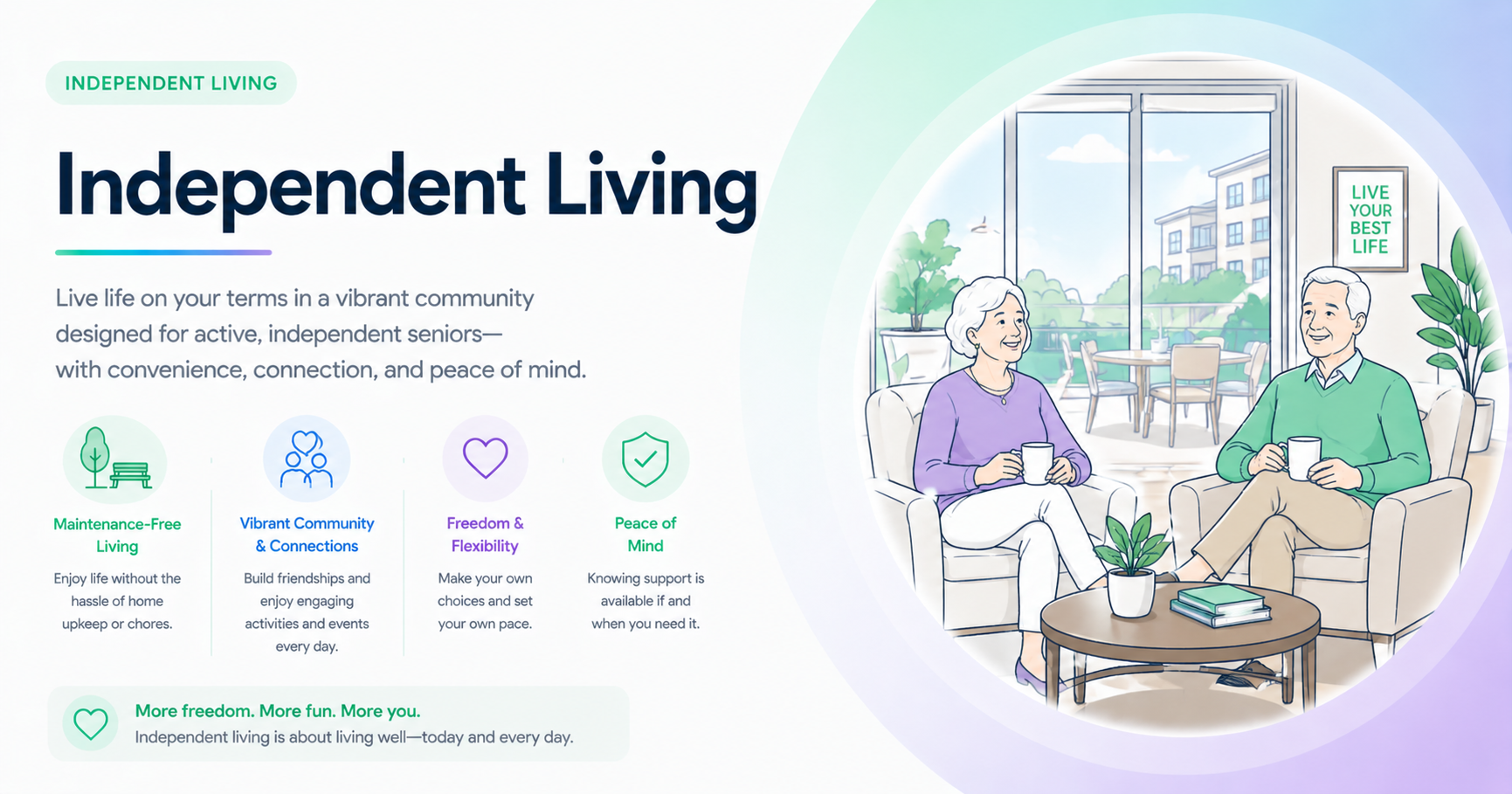
Independent living is a residential community for older adults who can manage daily life on their own but want to trade home maintenance for amenities, social programming, and a peer community — with no on-site personal care or medical services included.
Expanded definition
Independent living sits at the upper end of the senior care continuum, designed for older adults — typically 55 to 75 when they first move in — who are healthy, active, and want to stop worrying about home repair, yard work, and the social isolation that often comes with aging in place. The trade is straightforward: residents give up the autonomy of a private house in exchange for a maintenance-free apartment, cottage, or villa with shared amenities and a built-in social community.
What independent living provides
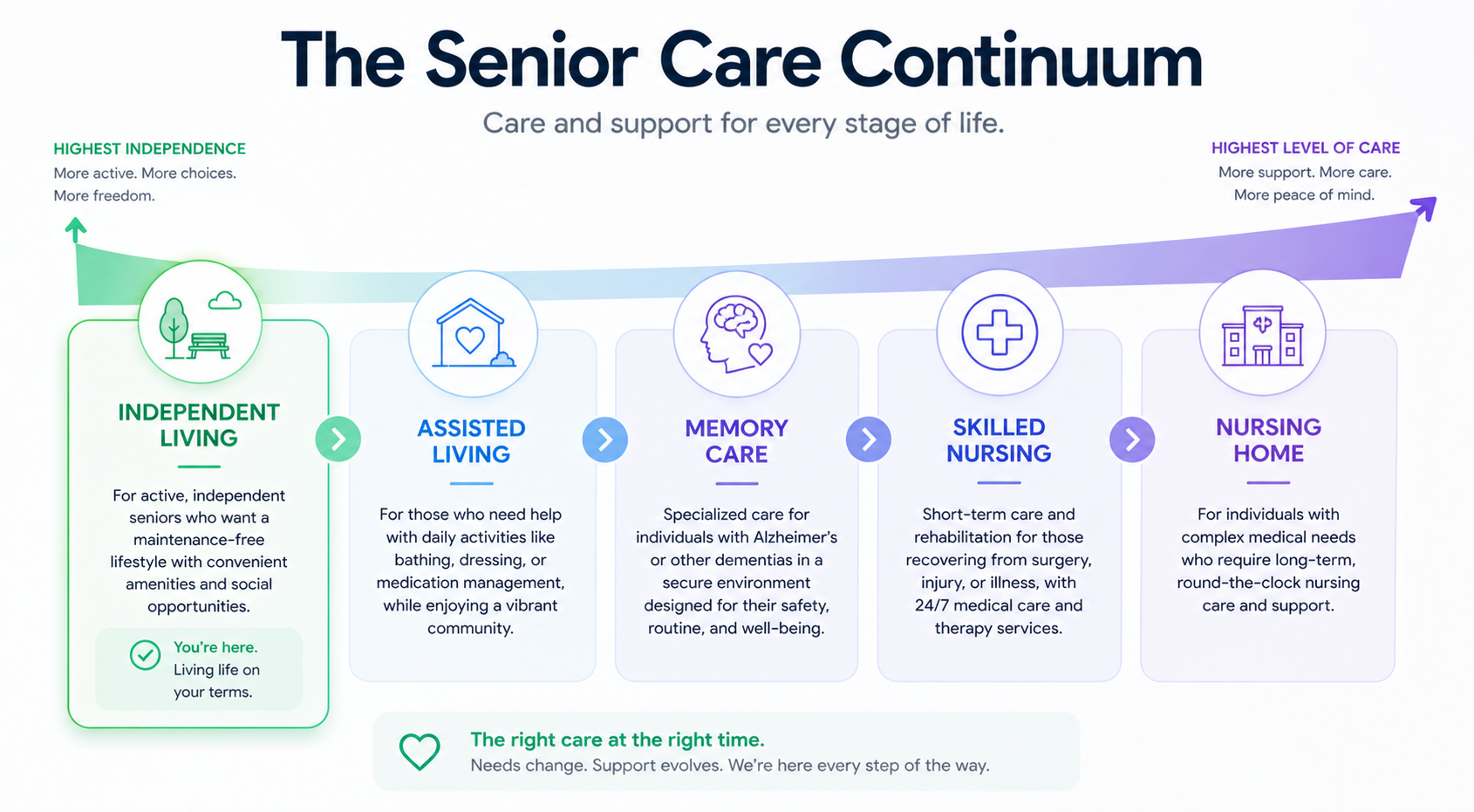
What independent living provides is housing, dining, social programming, fitness amenities, transportation, housekeeping, and a 24-hour security or emergency-response presence. What it does not provide is personal care, medication management, dementia care, or skilled nursing. A nurse may be on site a few days a week for routine questions, but residents are expected to manage their own activities of daily living. If a senior begins needing help with bathing, dressing, or medication, independent living is no longer the right setting — the next step is typically assisted living, often within the same campus if the community is part of a CCRC.
What makes independent living unique
Family members researching senior living often confuse independent living with several adjacent housing types. The distinctions matter. Active adult communities and 55+ communities share the age restriction but are usually housing-only, without dining or programming. Senior apartments are typically lower-cost rental housing for older adults, often subsidized through HUD's Section 202 program for low-income seniors, with limited amenities. CCRCs (Life Plan Communities) include independent living as one care level on a campus that also offers assisted living, memory care, and skilled nursing. Continuing care at home programs deliver some independent living amenities to seniors who stay in their own houses.
How to pay for independent living
Independent living is paid privately. The national median runs roughly $3,000 to $3,100 per month according to industry surveys, with a typical range of $2,100 to $4,800 depending on metro, residence size, and amenities included. CCRCs that include independent living often add a one-time entrance fee on top of the monthly rate. Medicare and Medicaid do not cover independent living costs, because no clinical care is provided. Long-term care insurance generally does not cover it either. For seniors with limited resources, HUD Section 202 and similar local programs offer subsidized senior housing alternatives, though waiting lists are typically long.
Frequently Asked Questions
- What's the difference between independent living and assisted living?
- Independent living provides housing, dining, and social amenities for seniors who are mostly self-sufficient. Assisted living adds 24-hour staff and personal-care help with bathing, dressing, medication management, and other activities of daily living. Independent living typically costs less than assisted living because no clinical care is provided. Many CCRCs offer both on the same campus, allowing residents to transition without moving communities.
- How much does independent living cost?
- The US median runs roughly $3,000 to $3,100 per month, with a typical range of $2,100 to $4,800 depending on metro, residence size, and amenities. CCRCs that include independent living often charge a one-time entrance fee on top of the monthly rate, ranging from tens of thousands to over $1 million depending on the contract and community.
- Does Medicare or Medicaid pay for independent living?
- No. Medicare and Medicaid do not cover independent living because no clinical care is provided — these programs only cover medically necessary services. Residents pay privately. Long-term care insurance generally does not cover independent living either. For low-income seniors, HUD's Section 202 program and similar local programs provide subsidized senior housing, though waiting lists are typically long.
- What's the difference between independent living and a 55+ community?
- A 55+ community (also called an active adult community) is age-restricted housing with shared common spaces and sometimes a clubhouse, but typically no dining program, housekeeping, or organized programming. Independent living adds those services. Most 55+ residents continue to manage their own homes; most independent living residents have moved out of theirs. Costs reflect the difference — 55+ housing is often cheaper but requires more self-management.
- What happens if my parent needs more care while in independent living?
- Most independent living communities will ask residents to move out — or transition to assisted living or memory care if those are available on the same campus. Some communities allow residents to bring in private home-care aides while living in independent living, which can extend a stay temporarily. CCRCs are designed specifically to handle this transition without requiring a move to a new community. Always ask about the community's care-progression policy before signing a lease.
- Who is independent living right for?
- Independent living suits seniors who are still managing daily life on their own but want a maintenance-free residence, a peer community, and built-in social and recreational programming. Many residents move in after a spouse's death, after a fall or health scare, or simply to downsize before they need more care. The most common entry age is between 70 and 80, though many communities accept residents as young as 55.