https://zenblis.com/glossary/skilled-nursing-facility
Skilled Nursing Facility (SNF)
A Skilled Nursing Facility (SNF) provides short-term medical care after a hospital stay. Medicare covers up to 100 days per benefit period — here's how it works.
By Derek Belfield - 2026-04-25
Definition
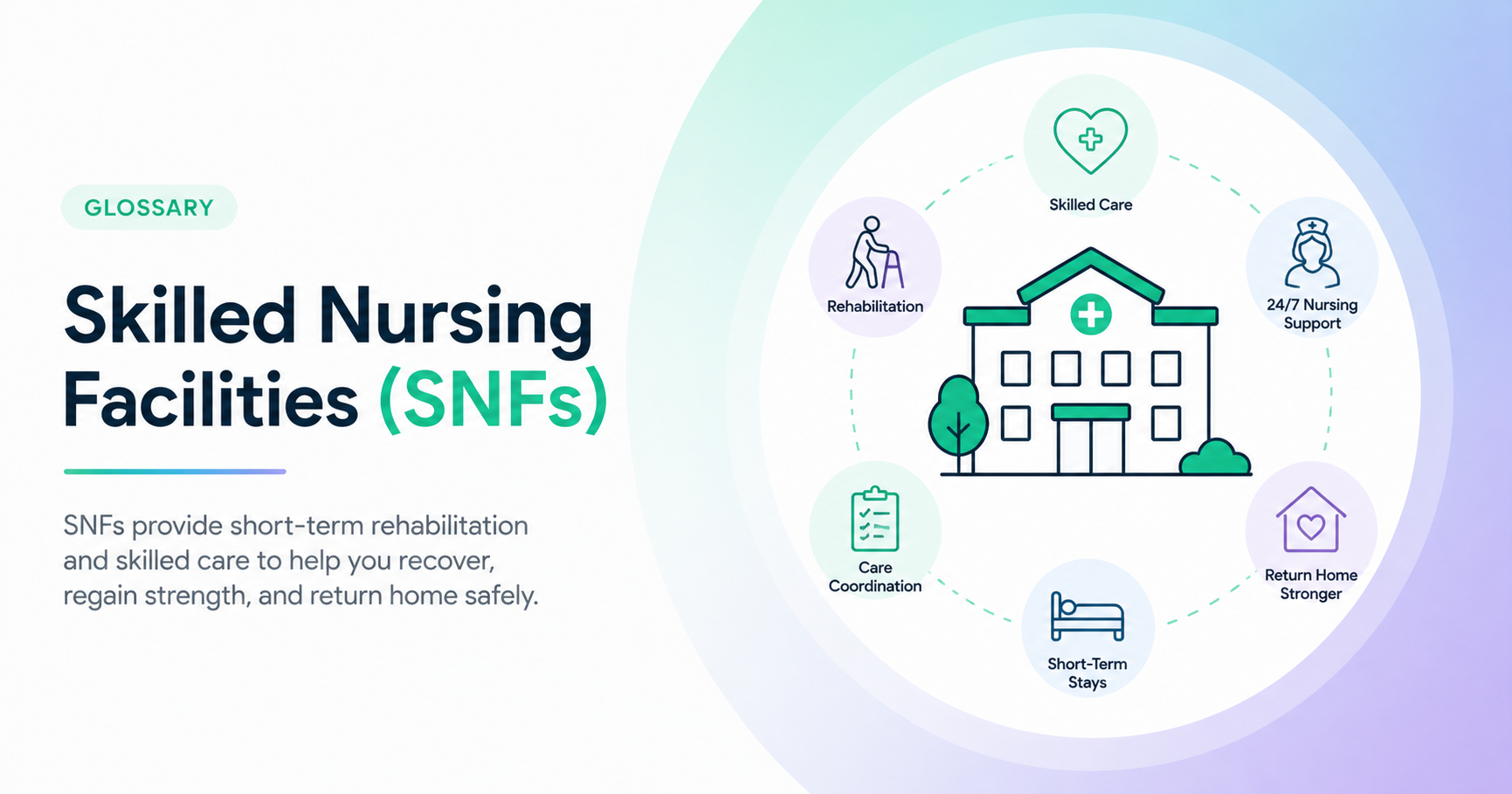
A Skilled Nursing Facility (SNF) is a Medicare-certified care setting that provides short-term, daily medical care — wound care, IV therapy, physical or occupational therapy, and skilled nursing — typically as a step between a hospital stay and returning home.
SNFs (often pronounced "sniff" in healthcare settings) exist for one purpose: medically necessary care that requires licensed nurses or therapists, delivered for as long as it takes a patient to recover or stabilize. They are different from nursing homes, although the same building often offers both. The clinical bar for SNF care is high — a patient must need skilled services seven days a week, or skilled therapy at least five days a week, ordered and certified by a physician.
SNF Care and Medicare Part A
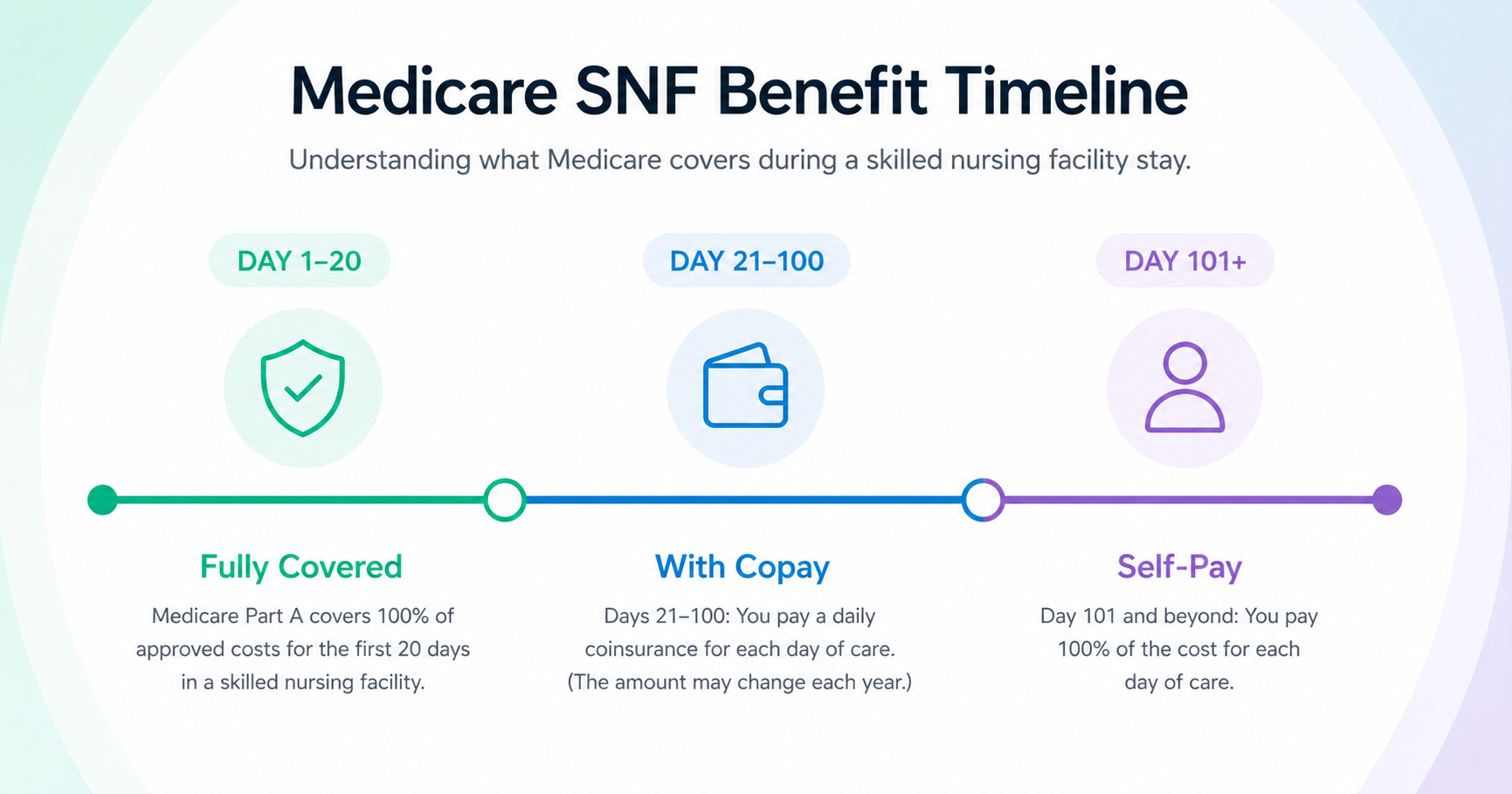
Medicare Part A is the primary payer for SNF care, but the rules are unusually strict. Coverage requires a qualifying three-day inpatient hospital stay (observation days do not count), admission to the SNF within 30 days of discharge, and care that is related to the condition treated in the hospital. Medicare covers up to 100 days per benefit period: the first 20 days at no cost, days 21–100 with a daily copayment that families should plan for, and nothing beyond day 100. Medicare Advantage plans sometimes waive the three-day hospital requirement, so always confirm with the plan directly.
Difference between SNF coverage and long-term nursing care
For families, the most common surprise is the difference between SNF coverage and long-term nursing home care. When a parent stops making measurable improvement, Medicare coverage ends — often with only 48 hours' written notice. This transition catches many families unprepared. The window between a hospital admission and the end of SNF coverage is usually 3–8 weeks, and using that time to research long-term options, evaluate Medicaid eligibility, or meet with an elder-law attorney often prevents a rushed and ill-fitting placement later.
What to look out for
A few things to watch for during a SNF stay: confirm the parent is actually classified as a hospital inpatient (not under "observation status") before transfer, ask the physical and occupational therapists weekly about measurable progress, and ask the SNF staff to give the family advance notice if Medicare is about to discontinue coverage.
Frequently Asked Questions
- What's the difference between a skilled nursing facility and a nursing home?
- A skilled nursing facility (SNF) provides short-term, medically intensive care after a hospital stay. A nursing home typically provides long-term custodial care for residents who need ongoing daily support. The same building often offers both, but the level of care, payment source, and length of stay are different.
- How much does Medicare pay for SNF care?
- Medicare Part A covers the first 20 days of SNF care at no cost. From day 21 to day 100, the patient pays a daily coinsurance ($217 per day in 2026). After day 100, Medicare pays nothing and all costs become the patient's responsibility.
- What is the three-day rule for SNF coverage?
- To qualify for Medicare SNF coverage, a patient must first have a qualifying inpatient hospital stay of at least three consecutive days. Days spent under "observation status" or in the emergency department do not count toward the three days, even if the patient stayed overnight. Some Medicare Advantage plans waive this rule.
- What happens if Medicare ends SNF coverage before my parent is ready to leave?
- SNF coverage ends when the patient stops making measurable improvement, even if it's before day 100. The family typically receives 48 hours' written notice. At that point, options include private pay, long-term care insurance, Medicaid (if the patient qualifies), or transitioning to home with home-health services. Families have the right to appeal a discharge.
- Can I choose which SNF my parent goes to?
- Yes, families have the right to choose any Medicare-certified SNF that has an available bed. The hospital discharge planner will offer recommendations, but the choice is the family's. Useful tools for comparing facilities include Medicare's Care Compare ratings, which include staffing levels, health inspections, and quality measures.