https://zenblis.com/glossary/assisted-living
Assisted Living
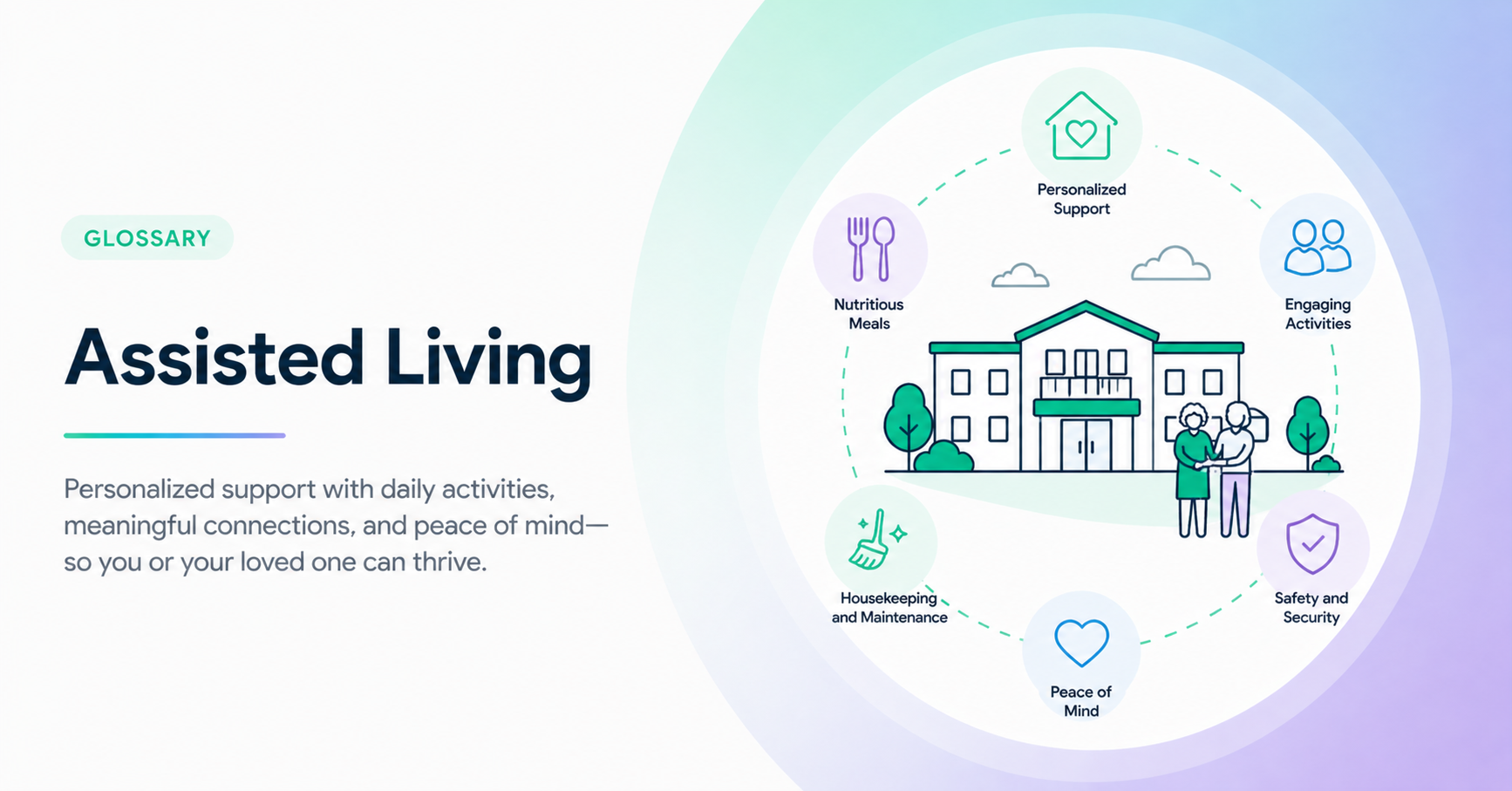
Assisted living combines housing, meals, and personal-care help for seniors who need daily support but not nursing-home medical care. State-licensed, mostly private-pay.
By Derek Belfield - 2026-04-25
Definition
Assisted living is a state-licensed residential care setting that combines housing, meals, and 24-hour staff support with personal-care assistance for seniors who need help with daily activities but do not need the medical intensity of a nursing home.
Expanded Definition
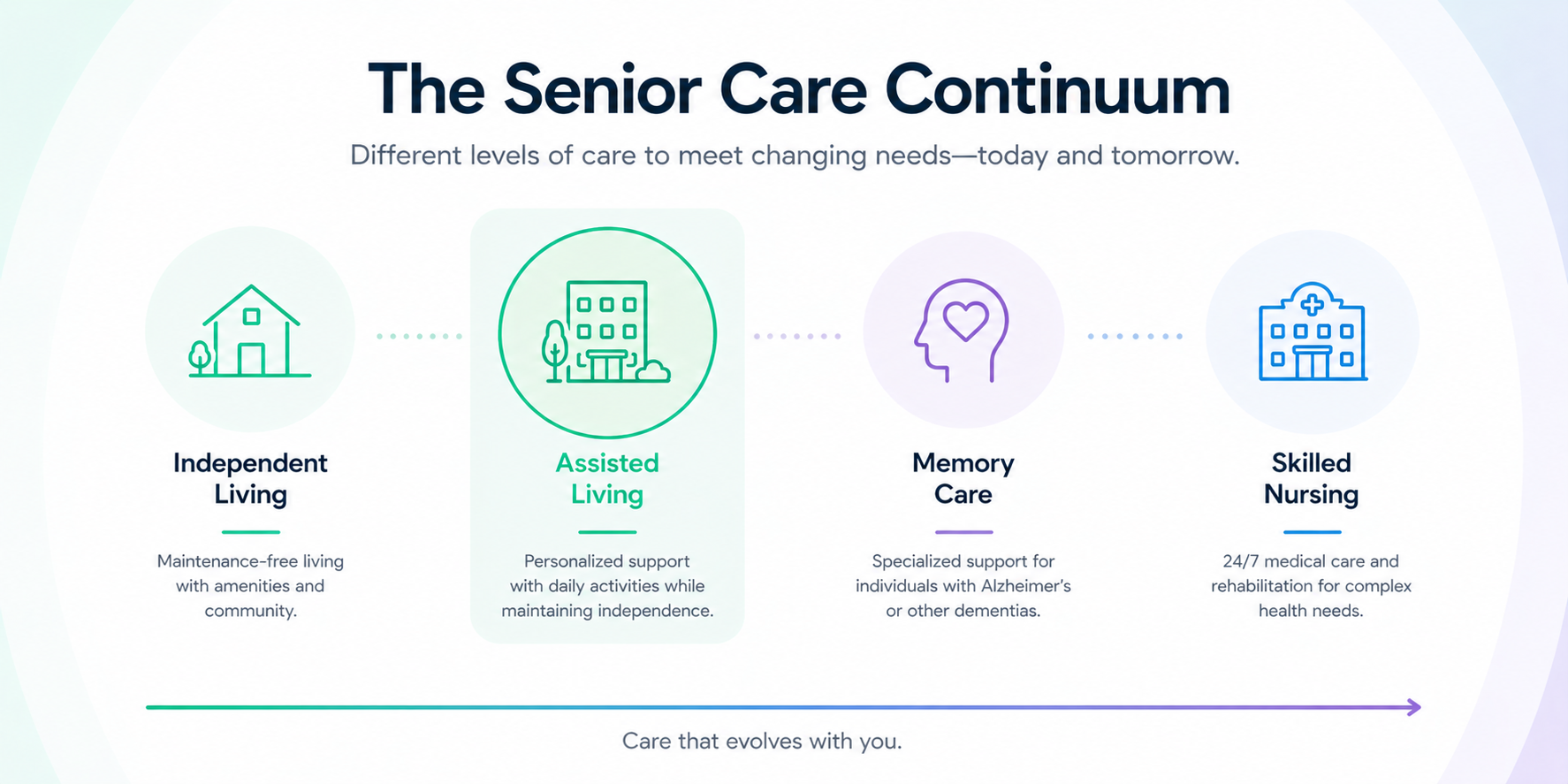
Assisted living sits in the middle of the senior care continuum — between independent living, where seniors manage their own daily lives, and nursing homes, which provide skilled medical care around the clock. Most residents are older adults who can no longer safely manage all activities of daily living on their own but are otherwise medically stable and want to maintain as much independence as possible.
Services
Common assisted living services include 24-hour staff availability, help with bathing and dressing, medication management, three meals a day, housekeeping and laundry, transportation, social activities, and emergency response systems. Roughly 14 percent of US assisted living communities operate a dedicated memory care wing, and another 8.7 percent serve dementia residents exclusively.
Payment
Assisted living is primarily private-pay. The median monthly cost in the US runs around $4,000 to $4,300, though prices vary widely by region and level of care. Medicare does not cover assisted living. Long-term care insurance often does, especially when a resident needs help with two or more ADLs. Some states cover limited assisted living services through Medicaid HCBS waivers, and the VA Aid and Attendance benefit can help eligible veterans with the cost.
Frequently Asked Questions
- What's the difference between assisted living and a nursing home?
- Assisted living provides housing and help with daily activities for seniors who are medically stable. Nursing homes provide 24/7 skilled medical care from licensed nurses for residents with complex medical needs. The two settings serve different levels of care, are licensed under different state rules, and are paid for differently — Medicare can cover short-term skilled nursing but does not cover assisted living.
- How much does assisted living cost?
- The US median runs around $4,000 to $4,300 per month, depending on the source, but costs vary widely by metro and level of care. Most communities offer multiple care tiers, with monthly fees rising as a resident needs more help. Memory care wings within assisted living typically cost 20 to 30 percent more than standard assisted living in the same community.
- Does Medicare pay for assisted living?
- No. Medicare does not cover assisted living room and board because it is considered custodial care, not medical care. Medicare may pay for specific medical services delivered to a resident inside an assisted living community, but not the residence itself. Medicare Advantage plans are starting to offer limited supportive benefits, but core assisted living costs remain out of Medicare's scope.
- How is assisted living regulated?
- Each state regulates assisted living independently — there is no federal standard. Licensing terminology, scope of services, staffing rules, inspection frequency, and discharge protections all vary state by state. The National Center for Assisted Living publishes an annual State Regulatory Review that summarizes the rules in every state and DC.
- Who is assisted living right for?
- Assisted living usually fits seniors who need help with one to three activities of daily living, are mostly medically stable, and want a residential community with social and recreational programming. Seniors with significant cognitive decline, complex medical needs, or wandering risk often need memory care or a nursing home rather than standard assisted living.
- What payment options can cover assisted living?
- The most common payment sources are private savings, long-term care insurance, the VA Aid and Attendance benefit for eligible veterans, and — in some states — Medicaid HCBS waivers. A few states cover limited assisted living services through Medicaid for residents who meet income, asset, and clinical thresholds. Coverage availability varies dramatically by state and by waiver.