https://zenblis.com/glossary/memory-care
Memory Care
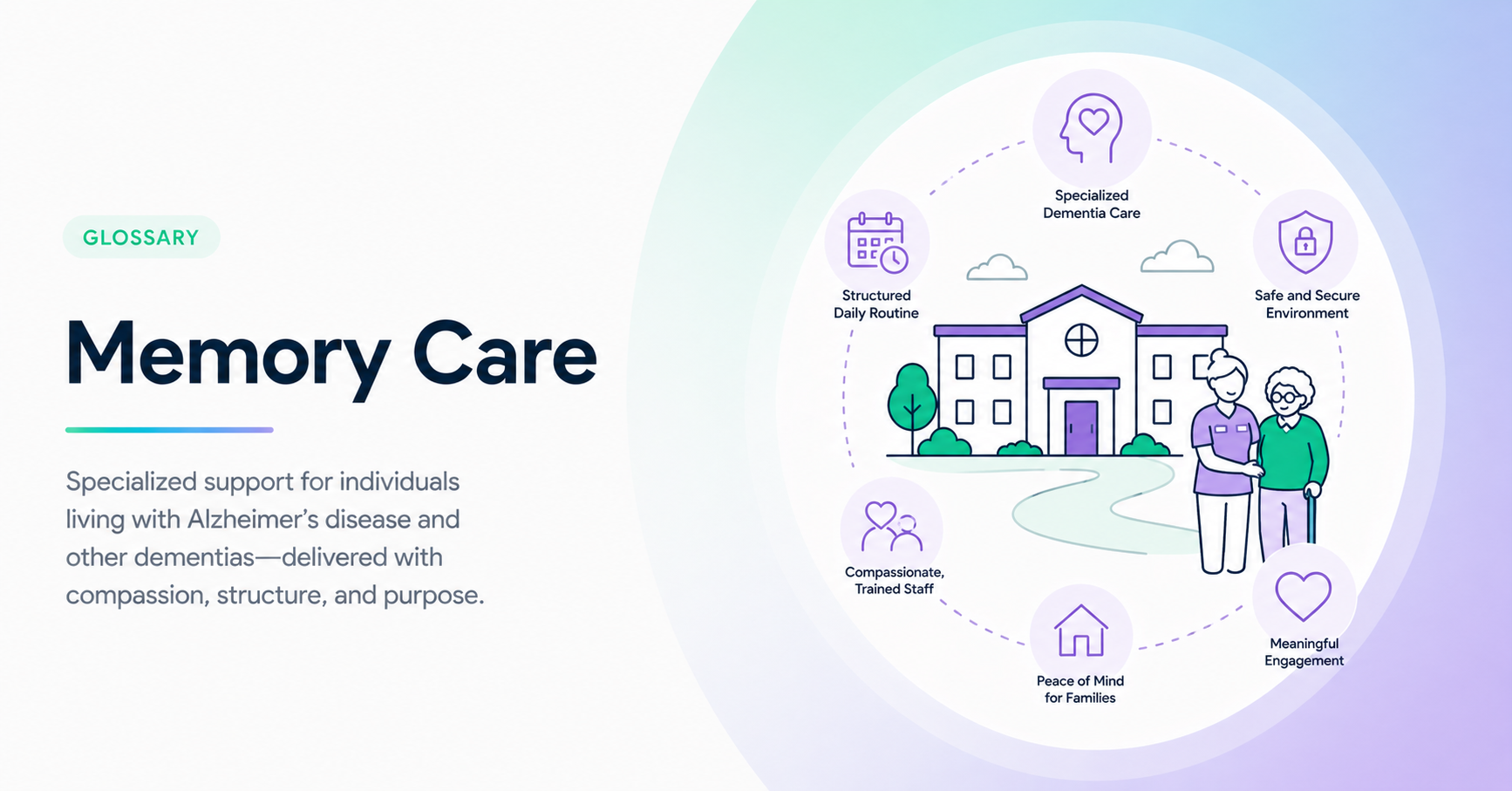
Memory care is specialized senior living for people with dementia, with secured environments, dementia-trained staff, and structured therapeutic programming.
By Derek Belfield - 2026-04-25
Definition
Memory care is a specialized form of senior living designed for people with Alzheimer's, dementia, and related cognitive conditions — combining secured environments, dementia-trained staff, and structured therapeutic programming around the clock.
Expanded definition
Memory care is built around the specific safety, behavioral, and therapeutic needs of residents living with progressive cognitive decline. The most visible difference from standard assisted living is the secured environment: alarmed or coded doors, enclosed outdoor courtyards, sometimes tracking bracelets — features designed to prevent wandering, which the Alzheimer's Association reports occurs in roughly six in ten people with dementia.
Memory care settings
Memory care can exist in three settings: stand-alone memory care communities, dedicated wings or "neighborhoods" within larger assisted living communities, or specialized units within nursing homes and Continuing Care Retirement Communities. The Alzheimer's Association calls these "special care units" or SCUs. Roughly 14 percent of US assisted living communities operate a memory care wing, and about 8.7 percent serve dementia residents exclusively.
Difference between memory care and assisted living
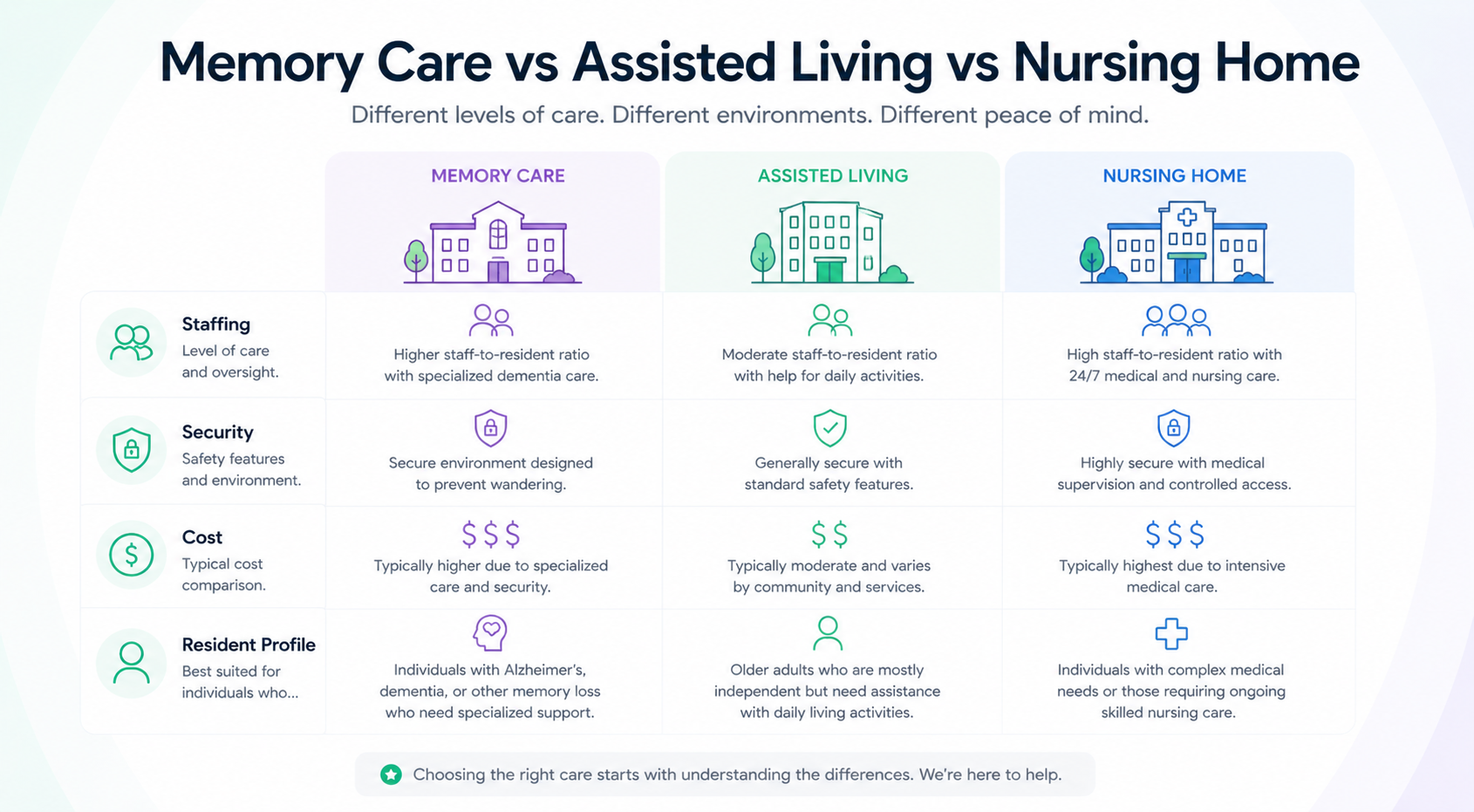
What separates memory care from assisted living is staff and programming. Caregivers receive dementia-specific training and use approaches like structured daily routines, cognitive-stimulation therapies, music and art programs, and "circular hallway" architectural designs that prevent the dead-end frustration common in standard buildings. The Joint Commission, in partnership with the Alzheimer's Association, offers a Memory Care Certification that signals a community has met higher standards for dementia-specific programming, staff training, and environmental safety.
Pricing
Cost reflects the higher staffing and security: memory care typically runs 20 to 30 percent more than standard assisted living in the same metro, with US medians often falling between $5,500 and $7,500 per month. Medicare does not cover memory care room and board. Most families pay through private savings, long-term care insurance, the VA Aid and Attendance benefit, or — in some states — Medicaid HCBS waivers for residents who qualify financially and clinically.
Who is memory care for?
Memory care is most appropriate for residents in the middle to later stages of dementia, when cognitive symptoms create safety concerns or outpace what assisted living can support. Common signals that it's time include unsafe wandering, severe sundowning, inability to manage medications safely, or a discharge notice from an assisted living community indicating that "a higher level of care" is needed.
Frequently Asked Questions
- What's the difference between memory care and assisted living?
- Assisted living supports seniors who are cognitively intact or have mild impairment and need help with daily activities. Memory care adds secured environments, dementia-specific staff training, and cognitive-focused programming for residents with moderate to advanced dementia. Memory care typically costs 20 to 30 percent more than standard assisted living in the same region.
- How much does memory care cost?
- Most US metros run between $5,500 and $7,500 per month for memory care, though costs vary widely by location and level of care. Memory care is consistently more expensive than standard assisted living because of higher staffing ratios, dementia-specific training, and the costs of secured infrastructure.
- Does Medicare pay for memory care?
- No. Medicare does not cover memory care room and board because it is considered custodial care, not medical care. Medicare may cover specific medical services delivered inside a memory care community — like physician visits or hospice care — but not the residence or its dementia-specific programming.
- When is it time to move to memory care?
- Common signals include unsafe wandering, severe sundowning, the inability to safely manage medications, caregiver exhaustion, or a notice from an assisted living community that a higher level of care is needed. Many families also consider memory care when cognitive decline begins to threaten safety at home or when the primary family caregiver is no longer able to provide adequate supervision.
- What does memory care staff training look like?
- Quality memory care staff receive training in dementia-specific approaches such as the Positive Approach to Care (Teepa Snow), Dementia Care Mapping, or Certified Dementia Practitioner credentials. The Joint Commission's Memory Care Certification, developed with the Alzheimer's Association, recognizes communities that meet higher standards for dementia-specific programming and staff competence.
- Can memory care be inside an assisted living community?
- Yes — most memory care exists as a dedicated wing or neighborhood within a larger assisted living or CCRC campus. Stand-alone memory care communities also exist. About 14 percent of US assisted living communities operate a memory care unit, and another 8.7 percent serve dementia residents exclusively.