https://zenblis.com/glossary/at-home-care
At-Home Care
At-home care covers both non-medical home care and medically necessary home health care. Two different services, two different payers — here's the difference.
By Derek Belfield - 2026-04-26
Definition
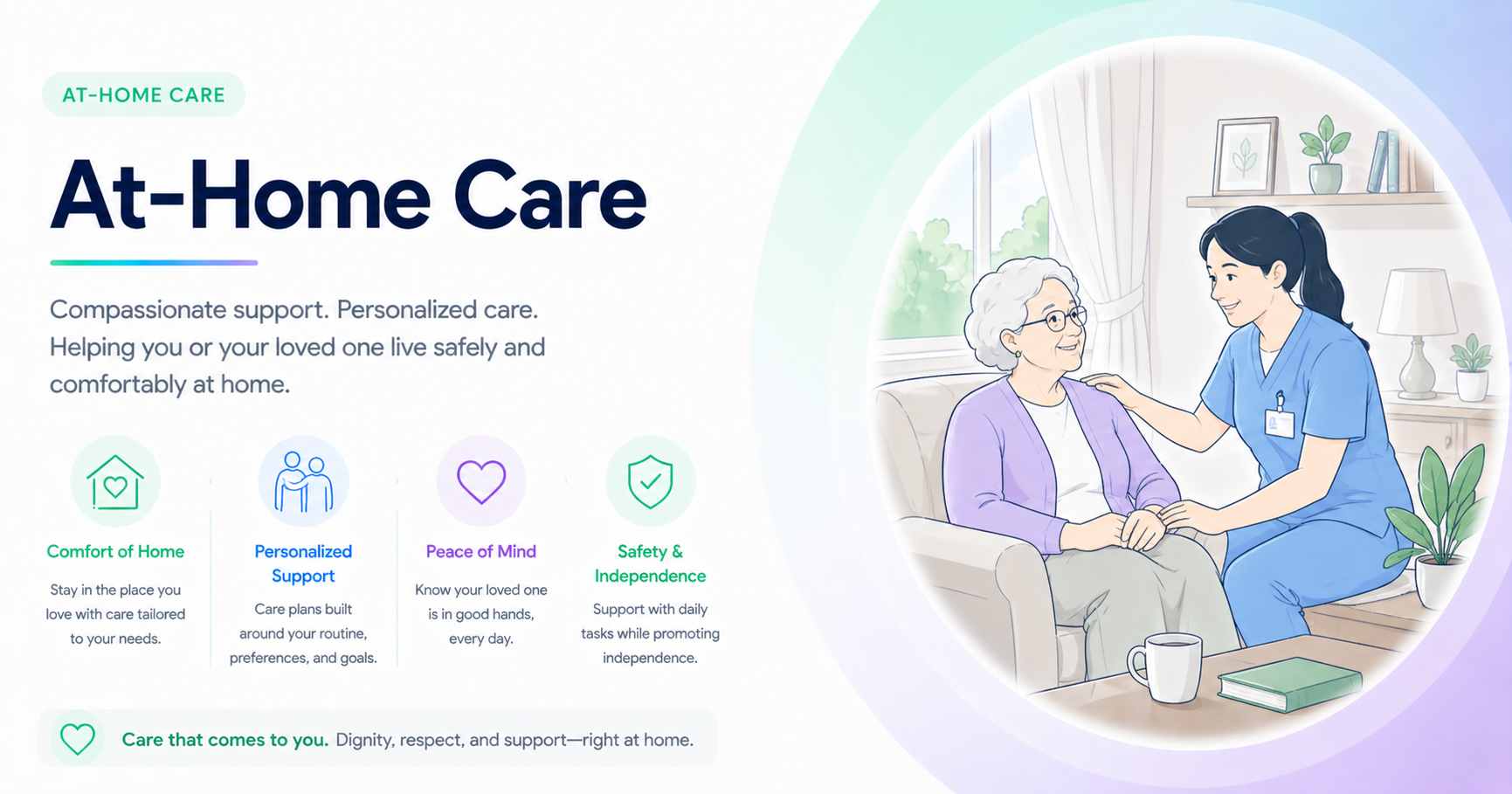
At-home care is a category of senior care services delivered in the senior's own residence, covering both non-medical personal care (often called "home care") and medically necessary skilled services (often called "home health care") — two distinct offerings that families and providers frequently confuse.
Expanded definition
At-home care is the broad umbrella for any senior care service delivered where the senior lives — a private house, apartment, assisted living community, or family caregiver's home. Underneath that umbrella sit two genuinely different services that most families encounter as a single confusing question and that most clinical and payment systems treat as completely separate. Getting the distinction right is one of the most consequential payment and care-planning decisions families make.
What comprises home care
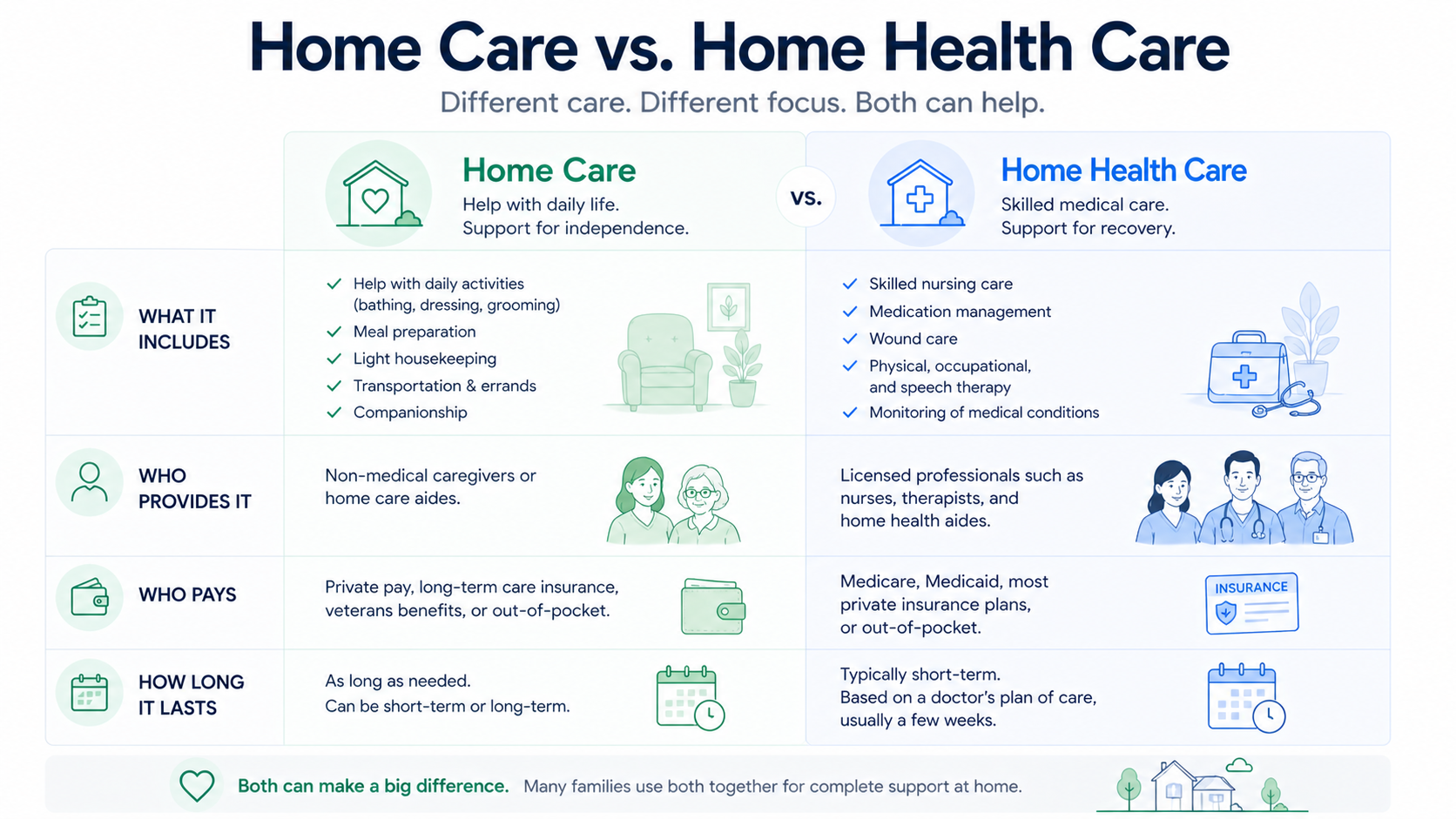
Home care, sometimes called non-medical home care or personal care, supports activities of daily living: bathing, dressing, toileting, meal preparation, light housekeeping, medication reminders, transportation, and companionship. Home care is typically delivered by a home health aide or personal care aide working through a home care agency or hired privately. It is open-ended — a senior can receive home care for years — and is paid mostly out of pocket, through long-term care insurance, the VA Aid and Attendance benefit, or in many states through Medicaid HCBS waivers. The national median runs roughly $30 to $34 per hour according to industry surveys, with significant regional variation. Medicare does not cover home care when it is the only service a senior receives.
Medicare and home health care
Home health care is medically necessary, doctor-ordered, short-term clinical care: skilled nursing visits, physical therapy, occupational therapy, speech-language pathology, wound care, IV therapy, and medical social services. It is delivered by licensed clinical professionals — registered nurses, physical therapists, and others — through a Medicare-certified home health agency. Medicare Part A or Part B covers home health care in full when the patient is homebound, needs part-time or intermittent skilled care, and is under a physician-ordered plan of care that gets recertified every 60 days. The agency must be Medicare-certified, and the homebound criterion has a specific clinical meaning. Coverage is capped at roughly 8 hours per day and 28 hours per week and never includes 24-hour care. After the medical recovery goal is met, Medicare home health ends.
How home health care and home care are used
Many seniors need both at the same time — a few weeks of Medicare-covered home health for post-surgery rehabilitation, for example, layered on top of ongoing home care that the family pays privately. Some agencies offer both; others specialize. The two services have different licensing requirements, different staffing models, different documentation, and different payers. When a hospital discharge planner says "we're sending Mom home with home care," ask explicitly which service they mean — Medicare home health visits ending in 4 to 6 weeks, or ongoing home care that the family will need to pay for. The answer determines whether a family is preparing for a temporary clinical episode or an open-ended financial commitment.
Medicaid and home health care
Medicaid is where the picture changes most. Every state Medicaid program is required to cover medically necessary home health care, but most states go further and cover personal care, homemaker services, adult day care, home modifications, and respite for family caregivers — usually through Home and Community Based Services (HCBS) waivers. HCBS waivers are not entitlements: states cap enrollment, and many have wait lists ranging from months to years. Families with limited resources who anticipate eventually needing extensive home care should apply early, even before help is needed.
Frequently Asked Questions
- What's the difference between home care and home health care?
- Home care is non-medical personal support — bathing, dressing, meal preparation, companionship — delivered by aides, paid mostly out of pocket, and available open-ended. Home health care is medically necessary, doctor-ordered, short-term clinical care — skilled nursing, physical therapy, wound care — delivered by licensed clinicians, covered by Medicare and Medicaid when criteria are met, and ends when recovery goals are achieved. Both are "at-home care," but they are different services with different staff, different payers, and different time horizons.
- Does Medicare pay for at-home care?
- Medicare covers home health care when a patient is homebound, needs part-time or intermittent skilled care, is under a doctor-ordered plan, and uses a Medicare-certified home health agency. Medicare does not cover home care — the non-medical personal care that helps with daily activities — unless it's provided in conjunction with skilled care. Medicare home health is also capped at roughly 8 hours per day and 28 hours per week and never includes 24-hour care.
- What does it mean to be "homebound" for Medicare home health?
- Medicare's homebound criterion has a specific clinical meaning: the patient has trouble leaving home without help (a cane, walker, wheelchair, special transportation, or another person), or leaving home is not recommended due to their condition, or it requires a major effort. Patients can still leave home for medical treatment and short, infrequent absences — religious services, haircuts, family events — without losing homebound status. A physician must certify the homebound finding face-to-face before home health begins.
- How much does home care cost per hour?
- The national median runs roughly $30 to $34 per hour in 2024–2025 industry surveys, with state averages ranging from approximately $16 to $28 per hour for non-medical home care. Costs vary significantly by metro and by the level of training the aide has — dementia-trained or live-in caregivers typically command higher rates. Most home care is paid out of pocket, with secondary funding from long-term care insurance, VA benefits, and Medicaid HCBS waivers in eligible states.
- Will Medicaid cover at-home care?
- Every state Medicaid program covers medically necessary home health care. Most states also cover home care, homemaker services, adult day care, home modifications, and respite care through Home and Community Based Services (HCBS) waivers — but coverage details vary widely by state, and HCBS waivers often have enrollment caps and wait lists. Families with limited financial resources should apply for an HCBS waiver assessment early, even before help is needed.
- Can I get home care and home health care at the same time?
- Yes, and many families do. A senior recovering from surgery might receive Medicare-covered home health visits from a nurse and physical therapist for 4 to 6 weeks while simultaneously receiving privately-paid home care from an aide for daily personal needs. Some agencies offer both services; others specialize. Coordinating between the two requires a clear understanding of which provider handles what, how schedules align, and how clinical updates are shared.