https://zenblis.com/glossary/adls
Activities of Daily Living (ADLs)
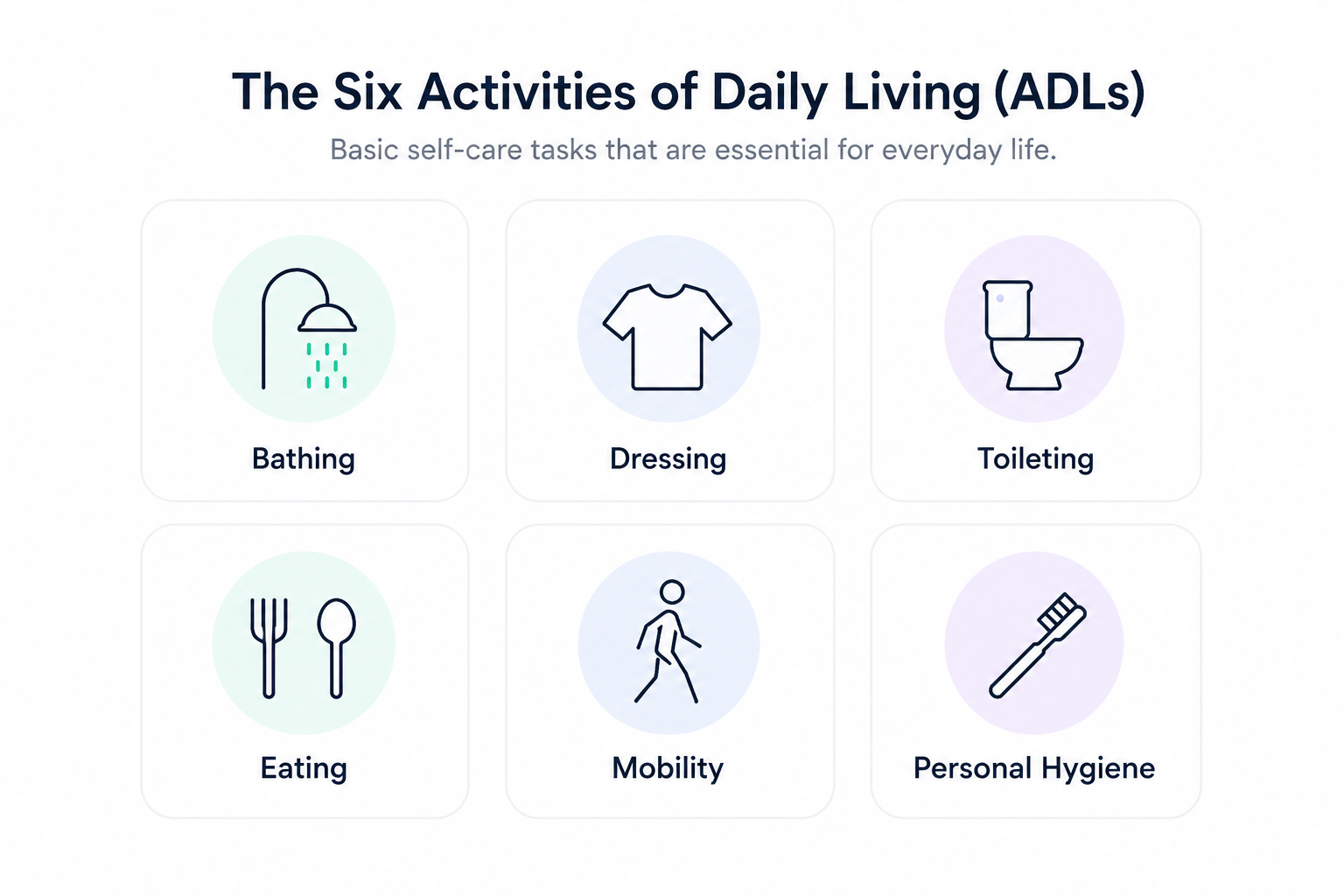
Activities of Daily Living (ADLs) are the six basic self-care tasks — bathing, dressing, eating, toileting, transferring, continence — that determine senior care needs.
By Derek Belfield - 2026-04-25
Definition
Activities of Daily Living (ADLs) — Activities of Daily Living (ADLs) are the basic self-care tasks — bathing, dressing, eating, toileting, transferring, and continence — that healthcare professionals use to measure whether a person can live independently or needs daily care assistance.
History of the Term
The concept was first developed by Dr. Sidney Katz at the Benjamin Rose Hospital in Cleveland in the 1950s. Katz's original framework identified six basic activities — bathing, dressing, toileting, transferring, continence, and feeding — and the Katz Index of Independence remains one of the most widely used clinical assessments today.
Most senior care decisions hinge on ADLs. When a family member is helping a parent navigate aging at home, deciding whether assisted living is appropriate, or applying for Medicaid long-term care benefits, the conversation almost always starts with which ADLs the senior can still perform independently. Hospital discharge planners, geriatric care managers, and Community Partner intake teams all use ADL assessments as the foundation for their care plans.
Difference between ADLs and IADLs
ADLs are different from Instrumental Activities of Daily Living (IADLs), which are the more complex skills like managing finances, preparing meals, and handling medications. People typically lose IADLs first, then ADLs as functional decline progresses. An honest ADL conversation between a healthcare provider and the family member — done early, before a crisis — is one of the most useful planning tools in the entire long-term care journey.
For payment purposes
Medicare does not pay for help with ADLs alone, because that's considered custodial rather than medical care. Long-term care insurance policies typically begin paying when the policyholder needs help with two or more ADLs. Medicaid long-term care eligibility in most states uses a Nursing Home Level of Care threshold that is largely defined by ADL dependence.
Frequently Asked Questions
- What are the six basic ADLs?
- The six basic ADLs are bathing, dressing, toileting, transferring (moving between bed, chair, and standing), maintaining continence, and eating. These come from Dr. Sidney Katz's 1950s framework and remain the standard clinical reference.
- Does Medicare pay for help with ADLs?
- No. Medicare considers ADL assistance to be custodial care, not medical care, and does not cover it. Some Medicare Advantage plans now offer limited in-home support, but most ADL help is paid through long-term care insurance, Medicaid, VA benefits, or private pay.
- How many ADLs can a person lose before needing assisted living?
- There is no fixed threshold, but most assisted living communities are designed for residents who need help with one to three ADLs. When a senior needs help with four or more, or has significant cognitive impairment, memory care or skilled nursing is often a better fit.
- What is the difference between ADLs and IADLs?
- ADLs are basic self-care activities like bathing and eating. IADLs (Instrumental Activities of Daily Living) are more complex skills like cooking, managing money, taking medications, and using transportation. People typically lose IADLs first as they age, then ADLs.
- Who can perform an ADL assessment?
- A primary care physician, geriatric care manager, occupational therapist, or social worker can perform a formal ADL assessment. Local Area Agencies on Aging often offer free or low-cost assessments, and many use the Katz Index or Lawton scale as their standard tool.