https://zenblis.com/glossary/hcbs-waiver
HCBS Waiver (Home and Community-Based Services Waiver)
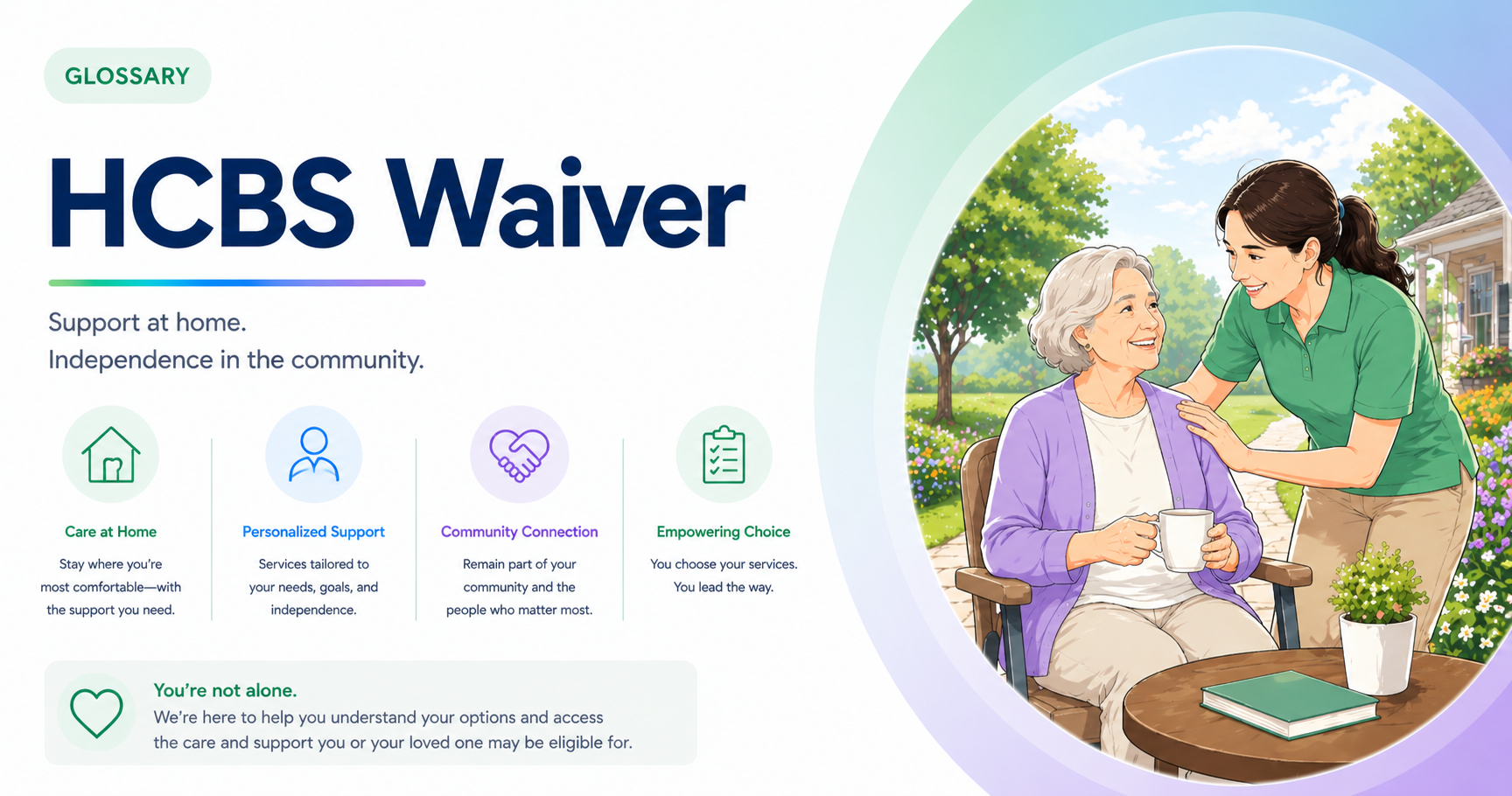
Home and Community-Based Services Waivers are how Medicaid pays for personal care, home modifications, and (in many states) assisted living services — letting seniors stay home instead of moving to a nursing home. Often involves waiting lists.
By Derek Belfield - 2026-04-26
Definition
An HCBS Waiver is a state-administered Medicaid program, authorized under Section 1915(c) of the Social Security Act, that pays for long-term care services delivered in a senior's home or community — including personal care, home modifications, adult day services, and in many states some assisted living services — for people who would otherwise need a nursing home.
Expanded definition
HCBS Waivers exist because Medicaid was originally designed around institutional care. Until Section 1915(c) was added to the Social Security Act in 1981, Medicaid paid for nursing home stays but offered very little for seniors who wanted to stay home with paid help. The waiver mechanism let states "waive" some standard Medicaid rules — including the requirement that services be available statewide and to all eligible residents — and design programs targeted to specific populations who could safely be cared for outside an institution. Today, nearly every state operates multiple HCBS waivers, with roughly 257 active programs nationwide. Combined with state plan benefits, HCBS now accounts for more than 60 percent of all Medicaid long-term services and supports spending — a complete inversion of the program's institutional roots.
Qualification criteria
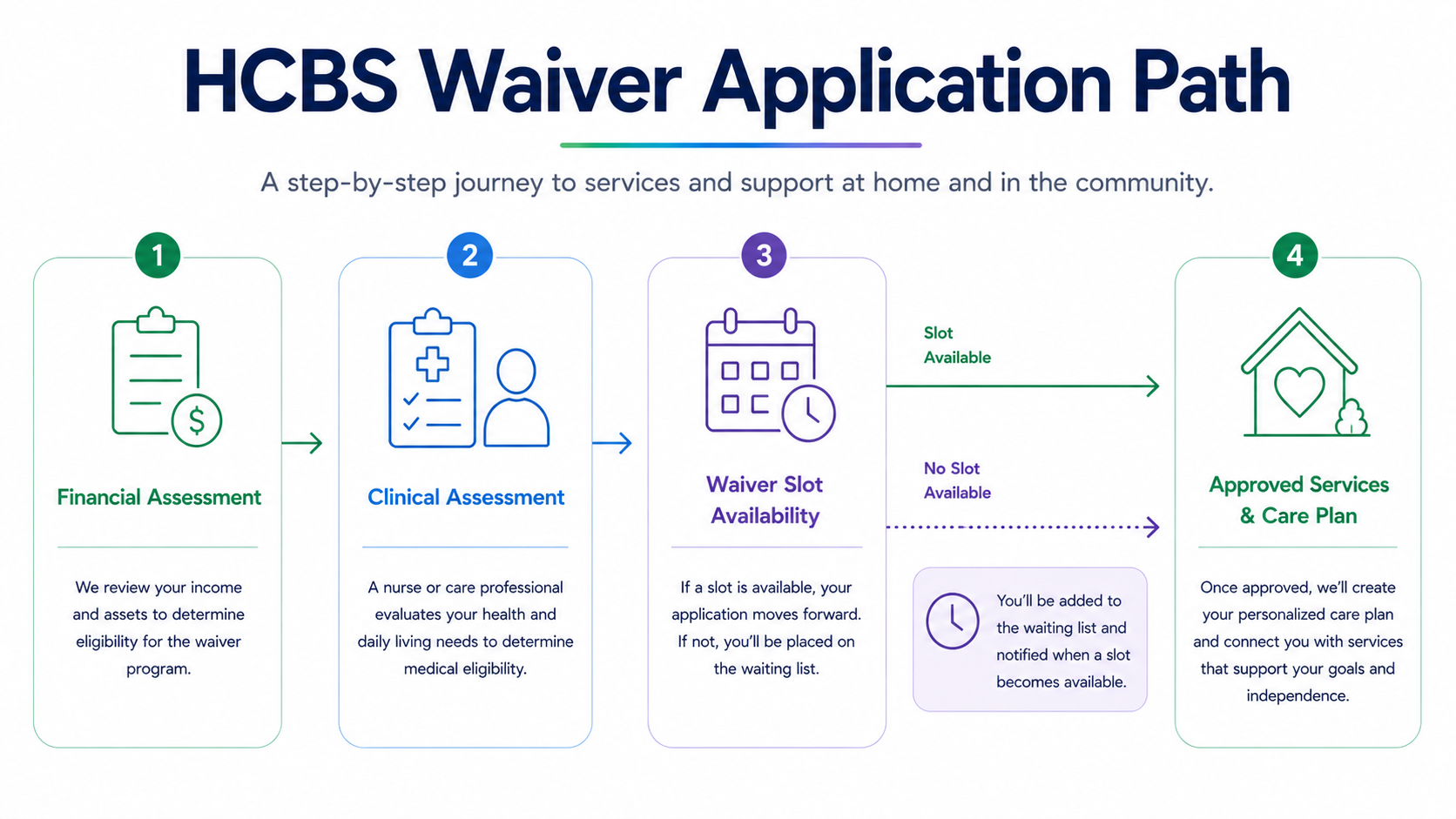
To qualify for an HCBS Waiver, a senior must meet three thresholds:
First, financial eligibility: most states use 300 percent of the federal Supplemental Security Income benefit rate, which sets a 2026 income limit of $2,982 per month for a single applicant, plus an asset limit that is typically $2,000 (with state variations).
Second, clinical eligibility: the senior must require a Nursing Home Level of Care, generally meaning substantial assistance with multiple activities of daily living, significant cognitive impairment, or comparable medical complexity.
Third, waiver capacity: because waivers are not entitlements, states cap enrollment in each program. When a waiver is full, applicants are added to a waiting list — often called an interest list, planning list, or registry, depending on the state.
Services HCBS covers
The services HCBS Waivers can cover are unusually broad. Standard offerings include case management, personal care assistance, home health aide services, adult day services, home modifications for safety and accessibility, durable medical equipment beyond what state plan Medicaid covers, transportation to medical appointments, respite care for family caregivers, and personal emergency response systems. In many states, HCBS Waivers also cover personal care services delivered inside an assisted living community — though Medicaid never pays for room and board in those settings. Some states offer waiver-specific services like specialized therapies, behavioral support, and family training. Each state designs its own waivers, so the specific service mix varies significantly across state lines.
HCBS Waivers for families
For families, the most consequential operational fact about HCBS Waivers is the waiting list. Because state legislatures cap enrollment to control costs, many waivers have multi-year waits ranging from months to several years. The MACPAC compendium of state waiver waiting list practices documents that of 254 reviewed waivers, 199 had documented waiting list management procedures — meaning enrollment caps are the rule, not the exception. Families anticipating eventual long-term care needs are consistently advised by elder-law attorneys and Area Agencies on Aging to apply for an HCBS waiver assessment as early as possible, even before help is urgently needed.
Frequently Asked Questions
- Who is eligible for an HCBS Waiver?
- Eligibility requires meeting three criteria: financial (typically income at or below 300 percent of the federal Supplemental Security Income benefit rate, or $2,982 per month in 2026, plus an asset limit usually around $2,000), clinical (needing a Nursing Home Level of Care, usually defined by significant ADL or cognitive impairment), and waiver capacity (a slot must be available, or the applicant joins a waiting list). Each state designs its own waivers and may target specific populations — older adults, people with intellectual or developmental disabilities, individuals with brain injury, or those with specific medical conditions.
- What services do HCBS Waivers cover?
- Common services include personal care assistance, home health aide visits, case management, adult day services, home modifications for accessibility, respite care for family caregivers, transportation to medical appointments, and durable medical equipment. In many states, HCBS Waivers also cover personal care services delivered inside an assisted living community, though Medicaid never pays for assisted living room and board. Specific services vary significantly by state and by waiver, and not every senior qualifies for every service the waiver authorizes.
- Is there a waiting list for HCBS Waivers?
- Often yes. Because HCBS Waivers are not entitlements like standard Medicaid, states can cap the number of people enrolled in each waiver and most do. Waiting lists vary widely — some states have no list for some waivers, while others have multi-year waits. The waiting list is sometimes called an interest list, planning list, or registry depending on the state. Of approximately 254 reviewed Section 1915(c) waivers, 199 had formal waiting list management procedures. Elder-law attorneys consistently advise families to apply early — well before care is urgently needed.
- Can an HCBS Waiver pay for assisted living?
- In many states, yes — but with an important limit. Medicaid HCBS Waivers can pay for personal care services delivered inside an assisted living community, but they do not pay for room and board in any assisted living setting. So the typical arrangement is the family or another source covering room and board while the waiver pays for the clinical and personal care services. Coverage details vary by state and waiver. The state Medicaid office or a local Area Agency on Aging can clarify what's covered in your specific state.
- What's the difference between an HCBS Waiver and standard Medicaid?
- Standard Medicaid (sometimes called State Plan Medicaid or Aged, Blind, and Disabled Medicaid) is an entitlement — anyone who meets the income and asset rules qualifies. HCBS Waivers are not entitlements; states cap enrollment, so qualifying financially and clinically doesn't guarantee a slot. Standard Medicaid covers a baseline of services everywhere; HCBS Waivers add a much broader range of community-based services beyond what state plan Medicaid offers, including services Medicare and standard Medicaid would not pay for.
- How do I apply for an HCBS Waiver?
- Applications go through the state Medicaid agency or a designated state department, depending on the state. The first step is usually contacting the local Area Agency on Aging or state Medicaid office to request a waiver assessment. The process includes a financial review, a clinical assessment to confirm Nursing Home Level of Care, and either enrollment in the waiver if a slot is available or placement on the waiting list. The full process from initial assessment to approved services can take 6 months or longer once a slot opens, which is one reason elder-law attorneys advise families to start early.