https://zenblis.com/glossary/hospice
Hospice
Hospice is comfort-focused care for people with a terminal illness and a life expectancy of six months or less. Medicare covers most services in full.
By Derek Belfield - 2026-04-25

Definition
Hospice is a Medicare-covered program of comfort-focused care for people who are terminally ill with a life expectancy of six months or less, designed to manage pain and symptoms and support both the patient and their family through the end of life.
Expanded definition
Hospice shifts the goal of care from curing illness to supporting comfort, dignity, and quality of life when a cure is no longer possible or desired. Patients elect hospice when they and their physician agree that aggressive treatment is no longer in the patient's interest, and that the priority becomes pain management, symptom relief, and emotional and spiritual support for both the patient and family.
How to qualify
To qualify for the Medicare Hospice Benefit, a patient must be entitled to Medicare Part A and certified as terminally ill by both their attending physician and a hospice physician, with a medical prognosis of six months or less if the illness runs its normal course. Election is voluntary — the patient or their representative signs a statement choosing hospice and waiving Medicare payment for curative treatment of the terminal illness. Care comes in two 90-day benefit periods followed by an unlimited number of 60-day periods, with recertification at each renewal. Hospice does not require a cancer diagnosis and does not require a DNR or advance directive, though families often complete those documents around the same time.
Where do families receive hospice care?
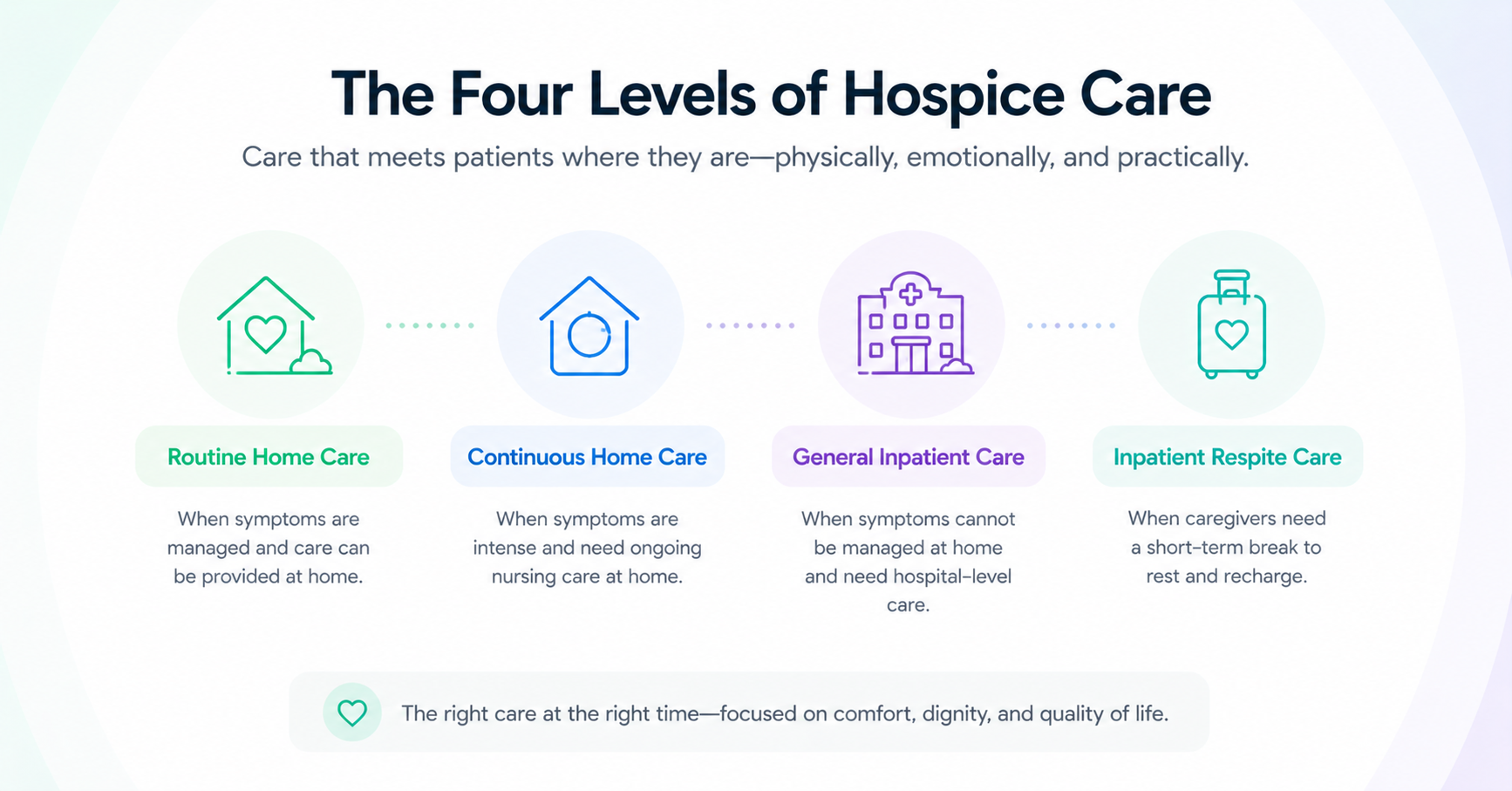
Most hospice care happens at home — including assisted living and nursing home settings, which Medicare considers "home" for hospice purposes. Care is delivered by an interdisciplinary team that typically includes a physician, nurse, social worker, chaplain, home health aide, and volunteers, with services coordinated through a written plan of care. Medicare pays for nursing visits, medications related to the terminal illness, medical equipment, counseling, short-term inpatient care for symptom crises, respite care to give family caregivers a break, and bereavement support for family members for at least 13 months after the patient's death.
How much do families need to pay?
Patients pay nothing for most hospice services from a Medicare-approved provider. There is a copay of up to $5 for outpatient prescription drugs related to pain or symptom management, and 5 percent coinsurance for inpatient respite care up to the annual hospital deductible. Room and board in a nursing home or assisted living community is not covered by the hospice benefit and remains the family's responsibility. Patients can leave hospice and return to standard Medicare at any time, and can re-elect hospice later if they remain eligible.
Frequently Asked Questions
- Who qualifies for hospice care?
- A patient qualifies for the Medicare Hospice Benefit when they are entitled to Medicare Part A and have been certified by both their attending physician and a hospice physician as terminally ill, with a life expectancy of six months or less if the illness runs its normal course. The patient must also choose to forgo curative treatment for the terminal illness. Hospice is not limited to cancer — it covers any terminal condition.
- What does Medicare pay for in hospice?
- Medicare covers nursing care, physician services, medications for pain and symptom management related to the terminal illness, medical equipment and supplies, home health aide visits, social work, spiritual counseling, short-term inpatient care for symptom crises, respite care for caregivers, and bereavement support for family for at least 13 months after the patient's death. Patients pay nothing for these services from a Medicare-approved provider, with two small exceptions noted in another question.
- What does hospice not cover?
- Hospice does not cover treatment intended to cure the terminal illness, prescription drugs unrelated to the terminal illness, or care from providers outside the hospice team for the terminal condition. Room and board in an assisted living community or nursing home is not covered — only the clinical hospice services delivered there. Patients are responsible for a copay of up to $5 per prescription for pain and symptom medications, and 5 percent coinsurance for inpatient respite care.
- Where does hospice care take place?
- Most hospice care happens at home, where Medicare's definition of "home" includes a private residence, an assisted living community, a nursing home, or a CCRC. Hospice can also be delivered in a freestanding inpatient hospice facility or temporarily in a hospital for symptom crises. The choice of setting is part of the plan of care developed by the patient, family, and hospice team.
- What if my loved one lives longer than six months?
- Patients can continue hospice as long as they remain eligible. After the first two 90-day benefit periods, hospice physicians or nurse practitioners must conduct a face-to-face visit with the patient before each subsequent 60-day recertification. There is no fixed time limit on the benefit. If a patient's health improves and they no longer qualify, they leave hospice and return to standard Medicare; they can re-elect hospice later if their condition declines again.
- Can someone leave hospice if they change their mind?
- Yes. A patient can revoke hospice at any time and return to standard Medicare coverage, including curative treatment for their illness. They can also re-elect hospice later if they remain eligible. The Medicare Hospice Benefit explicitly preserves this right — entering hospice is not a one-way door.