https://zenblis.com/glossary/iadls
Instrumental Activities of Daily Living (IADLs)
IADLs are the eight skills — phone, shopping, cooking, housekeeping, laundry, transport, medications, finances — that show if a senior can live independently.
By Derek Belfield - 2026-04-25
Definition
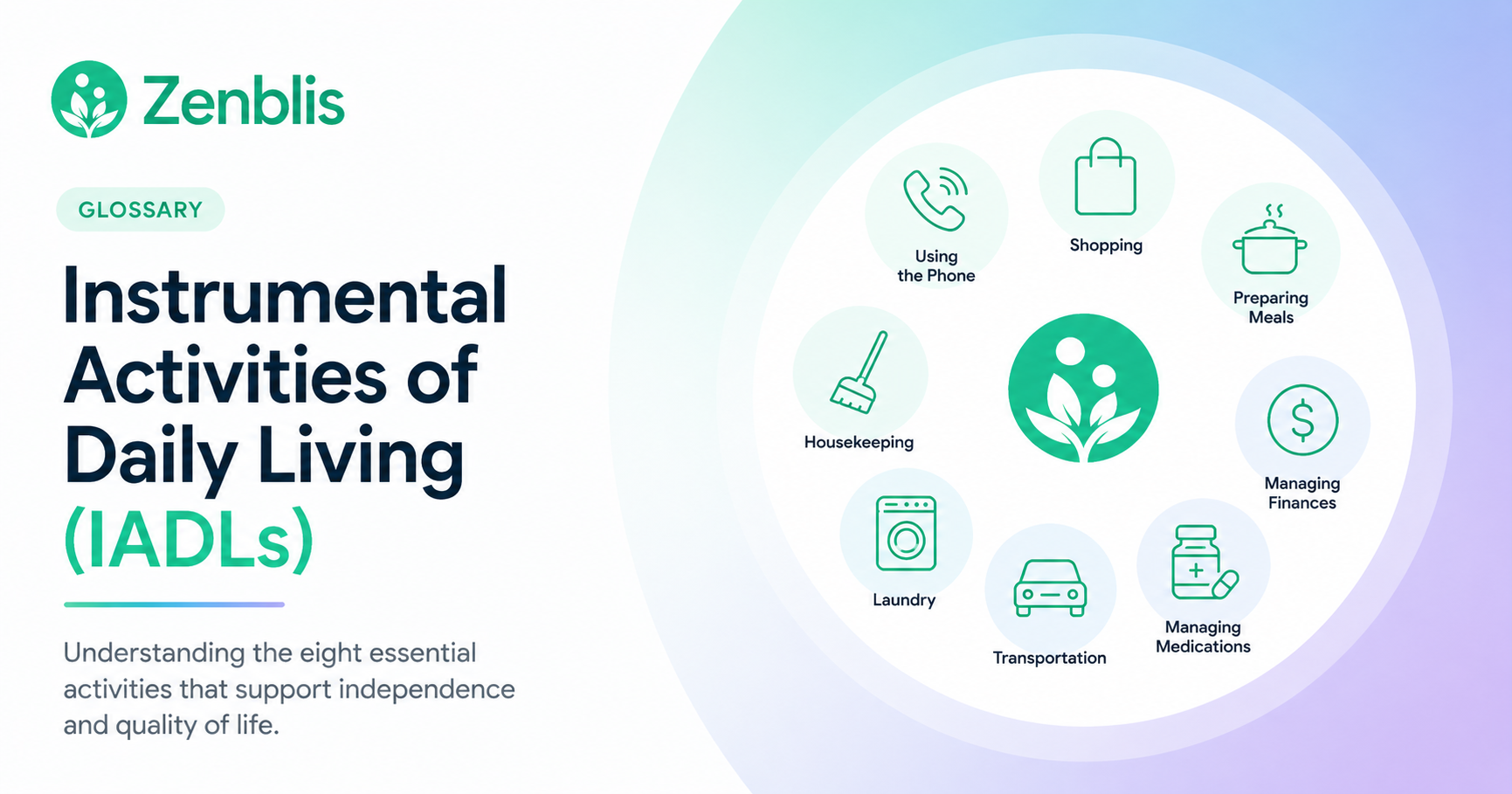
Instrumental Activities of Daily Living (IADLs) are the eight more complex skills — using a phone, shopping, cooking, housekeeping, laundry, transportation, managing medications, and handling finances — that families and clinicians use to gauge a senior's ability to live independently in the community.
IADLs as an early-warning system
IADLs typically decline before basic ADLs do, which makes them an early-warning system. A senior who is still bathing, dressing, and eating without help may already be skipping medications, missing bills, burning food on the stove, or unable to navigate a familiar route home. Catching these signals early gives families time to plan thoughtfully — adjusting the home, arranging transportation, setting up medication reminders, or starting conversations about senior care — instead of reacting to a crisis.
Why it matters for families
For families navigating senior care, the IADL conversation is often the harder one. Most seniors fiercely protect their independence, and IADLs touch the activities most tied to autonomy: driving, money, and the kitchen. Hospital discharge planners, geriatric care managers, and primary care physicians use IADL assessments precisely because the loss of these skills, even when the senior insists otherwise, is one of the strongest predictors of nursing home admission within the next year.
Why it matters for long-term eligibility
IADLs also matter for long-term care eligibility. Most long-term care insurance policies trigger benefits based on ADL deficits, but Medicaid waiver programs, Veterans Affairs aid-and-attendance benefits, and many state-level home-care programs factor IADL impairment into their qualifying assessments.
Frequently Asked Questions
- What are the eight IADLs?
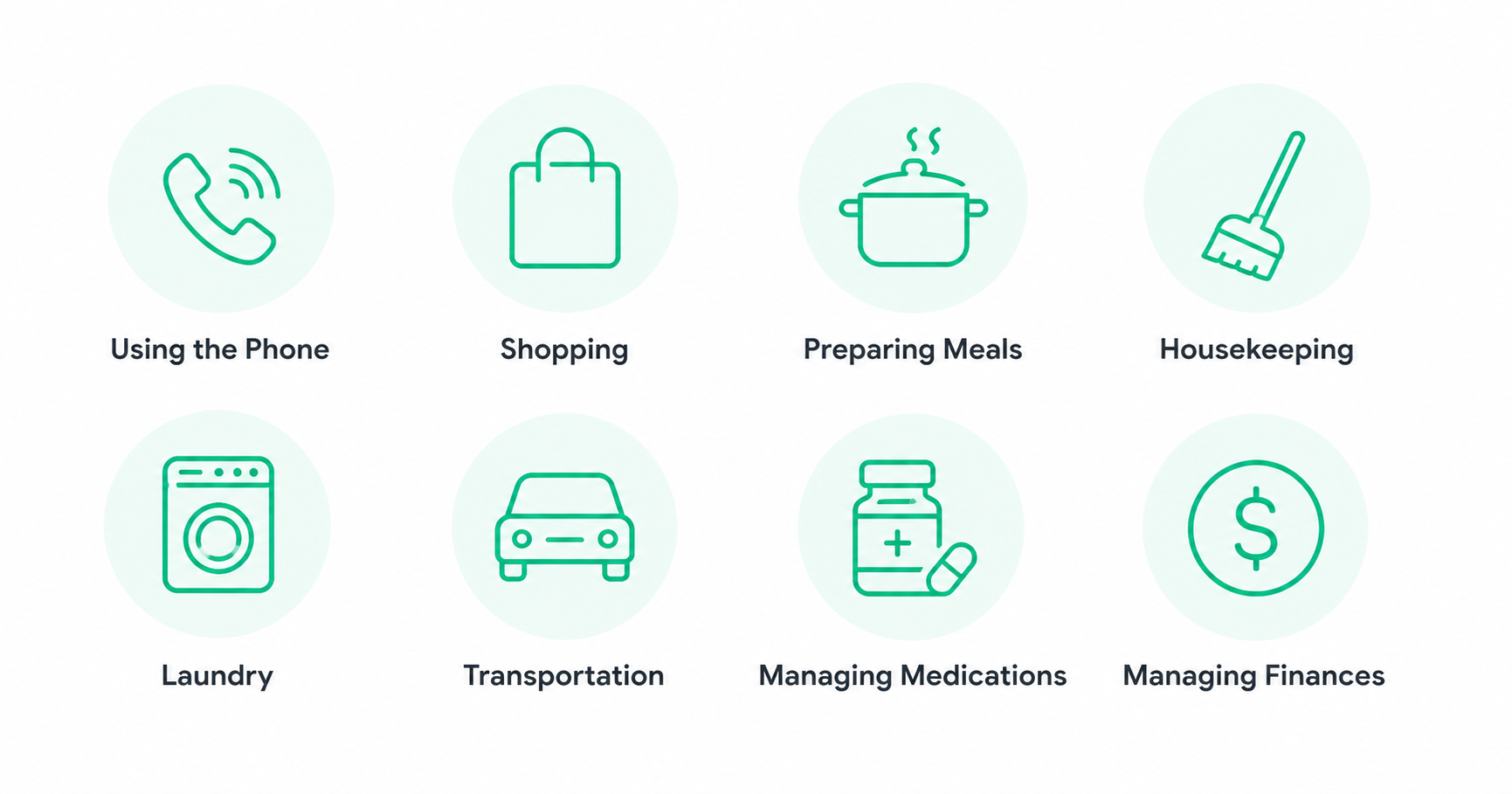
- The eight Instrumental Activities of Daily Living are: using a telephone, shopping, preparing meals, housekeeping, doing laundry, using transportation, managing medications, and handling finances. The Lawton-Brody scale measures all eight.
- What's the difference between ADLs and IADLs?
- ADLs are basic self-care tasks like bathing, dressing, and eating. IADLs are more complex skills required to live independently in the community, like cooking and managing money. People typically lose IADLs first as they age, which makes IADLs the earlier warning signal.
- Why do IADLs decline before ADLs?
- IADLs require more cognitive function — planning, sequencing, judgment, and memory. Conditions like early dementia and mild cognitive impairment affect these executive skills before they affect physical self-care, which is why IADL changes often appear months or years before basic ADL decline.
- How do I assess my parent's IADLs?
- A primary care physician, geriatric care manager, occupational therapist, or social worker can perform a formal Lawton-Brody assessment in 10–15 minutes. Local Area Agencies on Aging often provide free or low-cost assessments. Families can also do a quick informal review by walking through each of the eight domains together.
- Does Medicare cover IADL help?
- Generally no. Like ADL assistance, help with cooking, cleaning, transportation, and other IADLs is considered custodial care and falls outside Medicare's medical-care scope. Some Medicare Advantage plans now offer limited in-home support, and Medicaid waiver programs in most states cover IADL assistance for those who qualify financially and clinically.