https://zenblis.com/glossary/palliative-care
Palliative Care
Palliative care is symptom and pain relief for any serious illness — at any age, at any stage, alongside curative treatment. Different from hospice.
By Derek Belfield - 2026-04-26
Definition
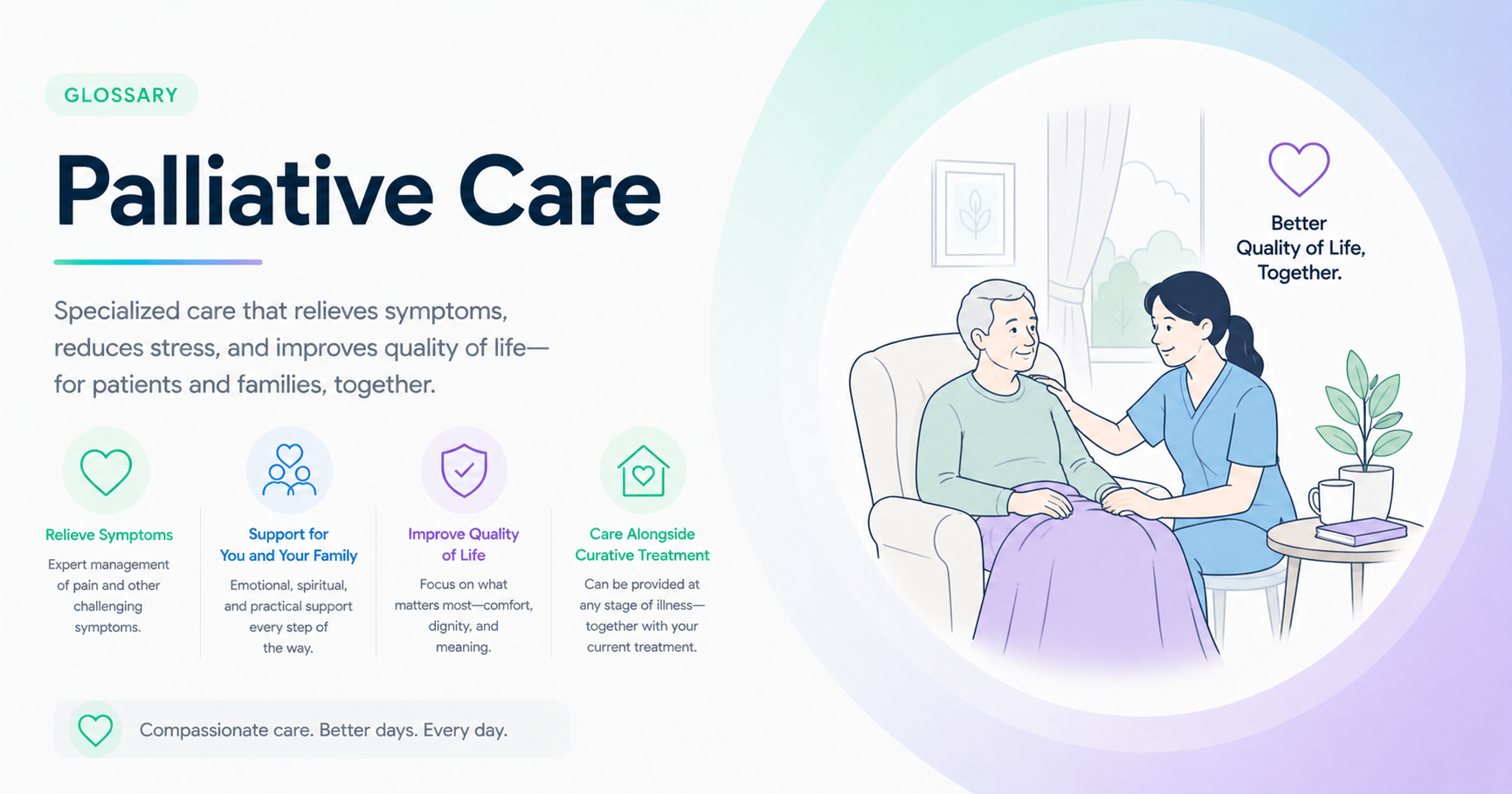
Palliative care is specialized medical care focused on relieving the symptoms, pain, and stress of a serious illness — provided at any age, at any stage of illness, and alongside curative treatment if the patient chooses.
Expanded definition
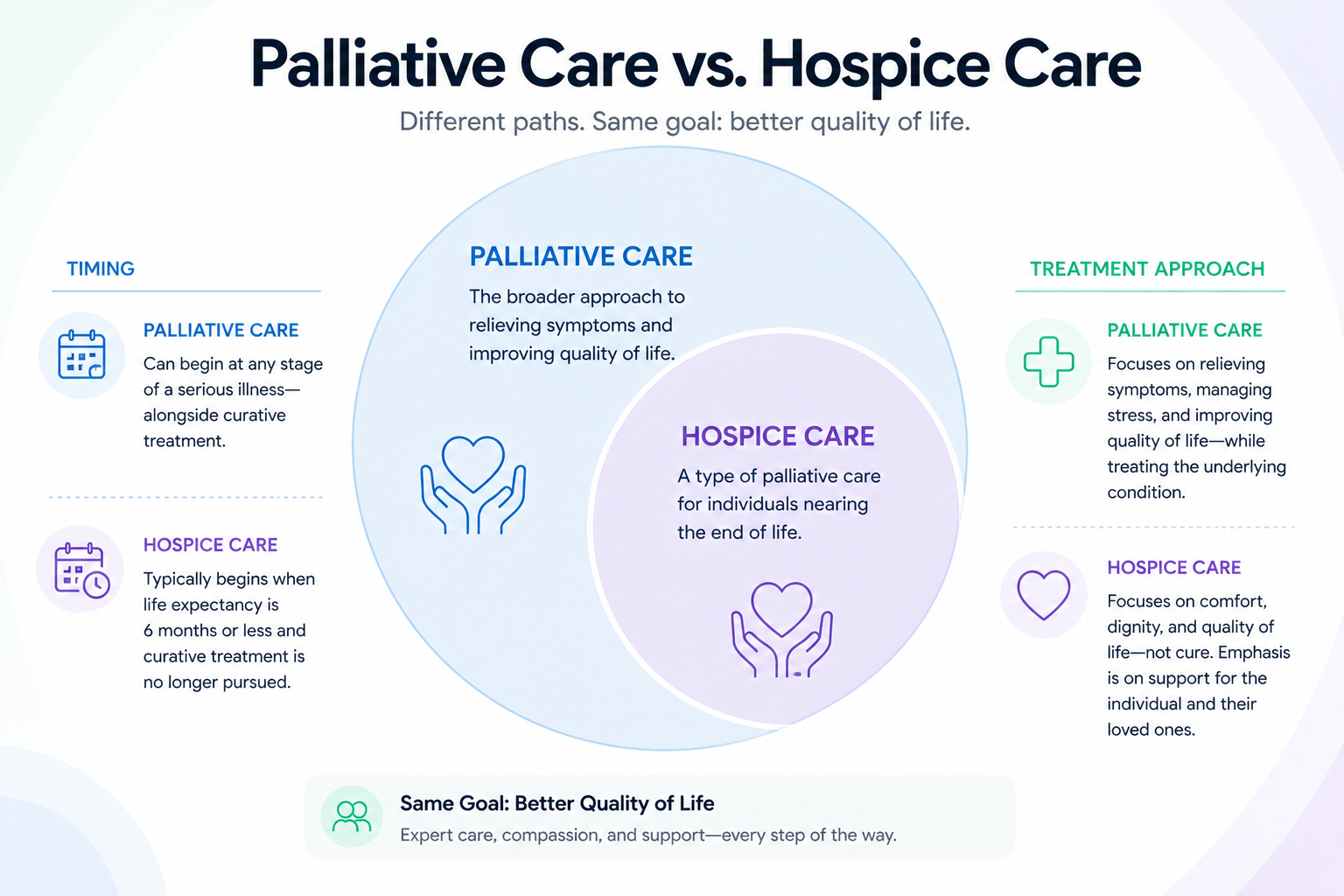
Palliative care is one of the most misunderstood services in modern medicine. Most families first hear the term in the same conversation as hospice and assume the two are the same. They are not. Hospice is a specific form of palliative care reserved for the last six months of life. Palliative care itself is much broader — an extra layer of support for anyone living with a serious illness, available from the moment of diagnosis and continuing through treatment, recovery, or end of life.
A patient receiving chemotherapy for breast cancer can have palliative care to manage nausea and fatigue while continuing to pursue a cure. A patient with advanced heart failure can have palliative care to help with shortness of breath and difficult treatment decisions while still receiving aggressive cardiac therapy. A patient with early-stage Parkinson's disease can have palliative care to plan ahead for the years of progression. None of these patients is dying soon, and palliative care does not imply that they are.
Who gives palliative care?
Palliative care is delivered by an interdisciplinary team — physicians, nurse practitioners, social workers, chaplains, psychologists, pharmacists — who work alongside the patient's primary doctors to manage symptoms, coordinate complex care, support emotional and spiritual needs, and help the patient and family understand their treatment options. The team approach is what families often value most. Palliative care can be provided in the hospital, in a clinic or doctor's office, in a nursing home or assisted living community, or at home.
Insurance coverage
Insurance coverage for palliative care is fragmented. Medicare Part B and most private insurance plans cover palliative care services delivered by physicians and nurse practitioners. Some coverage gaps remain — particularly for home-based palliative care that doesn't fit cleanly into hospice eligibility. The patient or family should ask the palliative care team directly what is covered and what may be billed.
Palliative care and hospice
The relationship to hospice is straightforward: when palliative care is provided to someone with a terminal prognosis of six months or less and the patient has chosen to forgo curative treatment, that care becomes hospice. All hospice care is palliative care. Not all palliative care is hospice.
Frequently Asked Questions
- What is the difference between palliative care and hospice?
- Palliative care is symptom-management and comfort care for anyone with a serious illness, available at any stage and alongside curative treatment. Hospice is a specific form of palliative care reserved for patients with a terminal prognosis of six months or less who have chosen to stop curative treatment. All hospice care is palliative care, but most palliative care is not hospice.
- Do I have to stop treatment to receive palliative care?
- No. Palliative care is delivered alongside curative treatment, not instead of it. A patient can continue chemotherapy, dialysis, surgery, or any other treatment while a palliative care team manages symptoms and side effects. This is one of the most important differences from hospice, where the patient elects to stop curative treatment for the terminal illness.
- Who qualifies for palliative care?
- Anyone with a serious illness can receive palliative care, regardless of age, prognosis, or stage of illness. Common conditions that benefit include cancer, heart failure, COPD, kidney disease, dementia, Parkinson's disease, and ALS. There is no six-month prognosis requirement and no requirement to forgo other treatment. A patient or family can ask their physician for a palliative care referral at any time.
- Where is palliative care provided?
- Palliative care can be delivered in the hospital, in an outpatient clinic, in a doctor's office, at home, or in a nursing home or assisted living community. Most large hospitals now have palliative care teams on staff, and home-based palliative care is growing. The setting depends on the patient's needs, the local availability of palliative care providers, and what insurance will cover.
- Does Medicare cover palliative care?
- Medicare Part B covers palliative care services delivered by physicians and nurse practitioners, including consultations and ongoing symptom management. Standard cost-sharing applies — meaning a patient may owe deductibles and coinsurance. Coverage for home-based palliative care that falls outside the Medicare Hospice Benefit can be inconsistent. Patients should ask the palliative care team specifically what is covered before starting services.
- Is palliative care a sign of giving up?
- No. Palliative care is an extra layer of support, not a withdrawal of care. Studies have shown that patients who receive palliative care alongside curative treatment often experience better quality of life, fewer symptom crises, and in some cases longer survival than those who do not. The goal is to help patients live as well as possible while pursuing whatever treatment goals they choose.