https://zenblis.com/resources/weekly-care-at-home-plan
Build a Weekly Care-at-Home Plan: A Family Guide
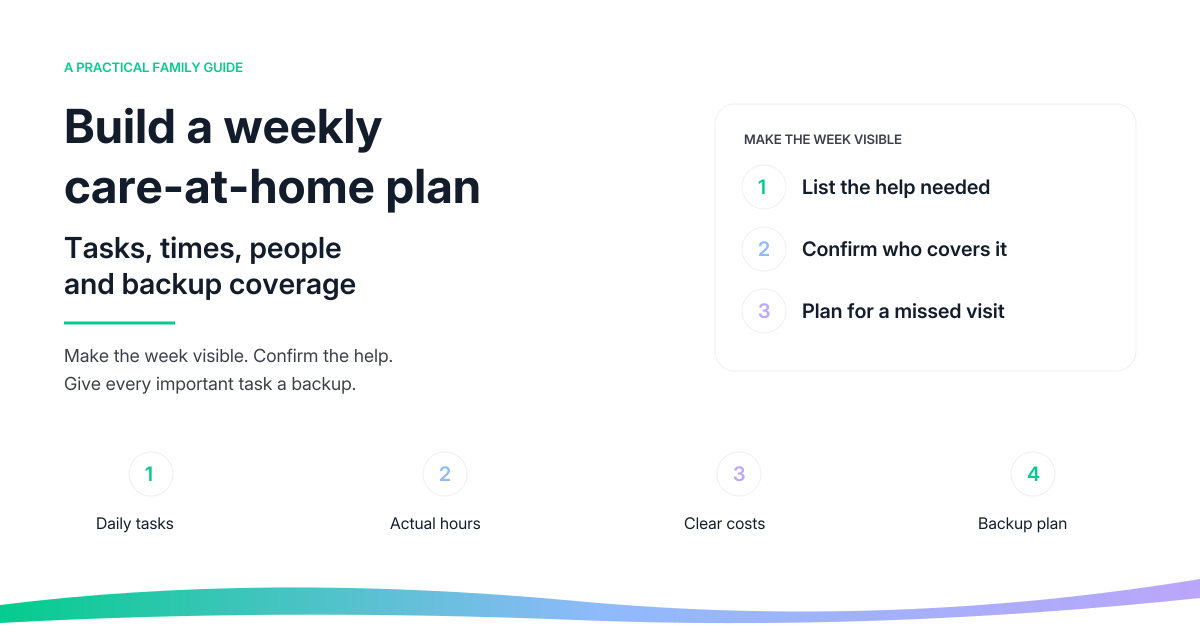
Build a weekly care-at-home plan by listing the help needed, assigning confirmed people and times, recording costs, and arranging backup coverage. Use the worksheet to make gaps visible and agree on the next call.
By Derek Belfield - 2026-09-06
- Caregiving
Summary
Make the help visible before the week begins
“We have help coming” can mean several different things. Someone may bring groceries on Tuesday. An aide may visit for two hours on Thursday. A relative may intend to stop by without having agreed on a day. Putting those arrangements in one place makes the next conversation more useful.
The goal is a practical week that the person receiving care and the people helping can understand. This guide offers an editorial planning worksheet, informed by the National Institute on Aging’s home-support guidance and provider-question worksheet. It does not replace a professional care assessment.
Time needed: Start with a family planning conversation; timing varies
What to gather
- The older adult’s priorities and preferred routines
- Existing visit times and provider contact details
- A blank weekly calendar or the worksheet below
- Written service quotes and benefit information, if relevant
- People who can confirm help and backup availability
Steps
Start with the person and the tasks
Ask what a good week looks like to the person receiving support. List the tasks they want help with and the routines they want to keep. Be specific: preparing breakfast, helping with dressing, getting to an appointment, or having company in the afternoon. Separate household work from personal assistance and clinical care. The National Institute on Aging describes these as different kinds of support. A service that delivers lunch may not help someone prepare it or eat it.
Tip: This worksheet organizes a conversation. It is not a clinical assessment or a test of whether someone can safely live alone. Ask the person’s care team about uncertain care needs.
Put the actual times on the week
Write the day, start time and end time for each confirmed visit. Add travel, pickup and handoff arrangements. Then look at mornings, evenings, weekends and the hours between services. A Tuesday visit does not cover Wednesday morning. Label anything that has not been arranged as unconfirmed, even when you expect someone will be able to help.
Tip: Do not turn every empty square into a care requirement. Identify which gaps matter for this person’s needs and preferences, with professional input where needed.
Confirm the person, service and cost
Assign a named person or provider to each task, then ask them to confirm the time and what they can actually do. Write down the agreed rate, minimum visit, transportation charges and cancellation terms where relevant. Keep benefit questions separate from scheduling: a service description is not confirmation that a program will pay. Ask the provider and payer to verify the specific arrangement.
Tip: Record a written quote or “not yet confirmed” rather than filling the budget with a national average. Include family time in the conversation, even when no money changes hands.
Give missed visits a clear backup
For each important task, agree on who receives a late or missed-visit call, who can step in, and what happens if that person is unavailable. Ask a provider how it handles absences and what it commits to in writing. Keep the contact list where the people involved can find it, with the older adult’s agreement. Do not assume a relative or agency is the backup until they have confirmed it.
Tip: Separate the missed-visit plan from emergency instructions. Use the person’s established care-team guidance for health concerns and emergency response.
Review the week and adjust
Choose a short check-in after the first week. Ask the older adult what worked, ask helpers whether the commitments were realistic, and review missed visits, unexpected costs and tasks that still need an answer. Change the shared plan and tell everyone affected. Revisit it sooner after a hospital stay, a change in needs, a provider change or a caregiver becoming unavailable.
Tip: A workable plan can include more than one kind of support. Adult day services, help at home and respite may play different roles, depending on the person and what is available locally.
A fictional visit, made specific
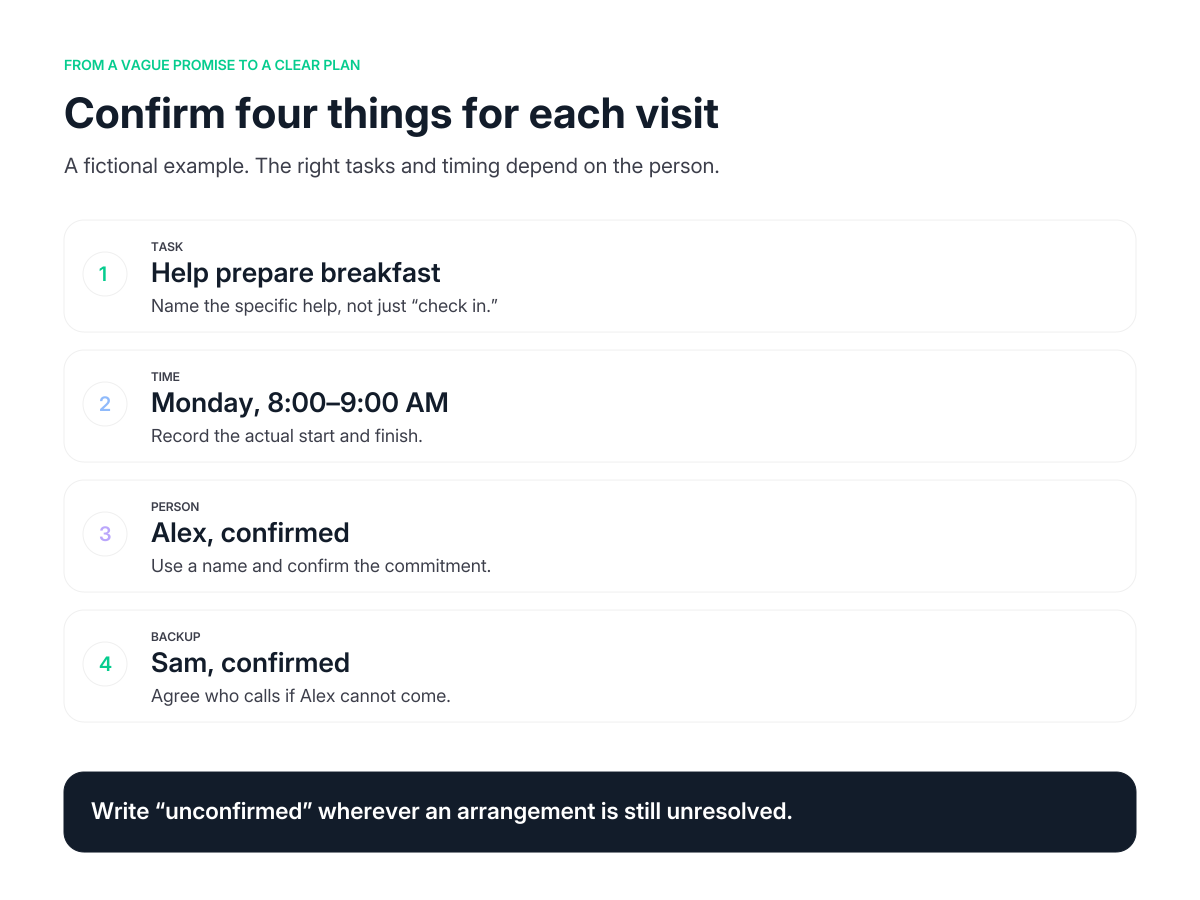
“Alex will help on Monday” leaves several questions open. A clearer entry is: Monday, 8:00–9:00 AM; help prepare breakfast; Alex confirmed; Sam confirmed as backup. The family still needs to record any cost, agree who calls if Alex cannot come, and decide whether there are other tasks to arrange.
This is a made-up example of one visit. It does not describe a complete week or establish an appropriate level of care.
Use the blank weekly worksheet
Save or print the worksheet below. Add the week, the person’s priorities and a review date. For every visit, record the time, task, person, cost and backup. Use another copy when a day has several visits. Mark unresolved arrangements “unconfirmed” and put the next call at the bottom.
Before sharing a completed worksheet, agree with the person receiving support on who needs it. Keep private health details out of a widely shared family calendar.
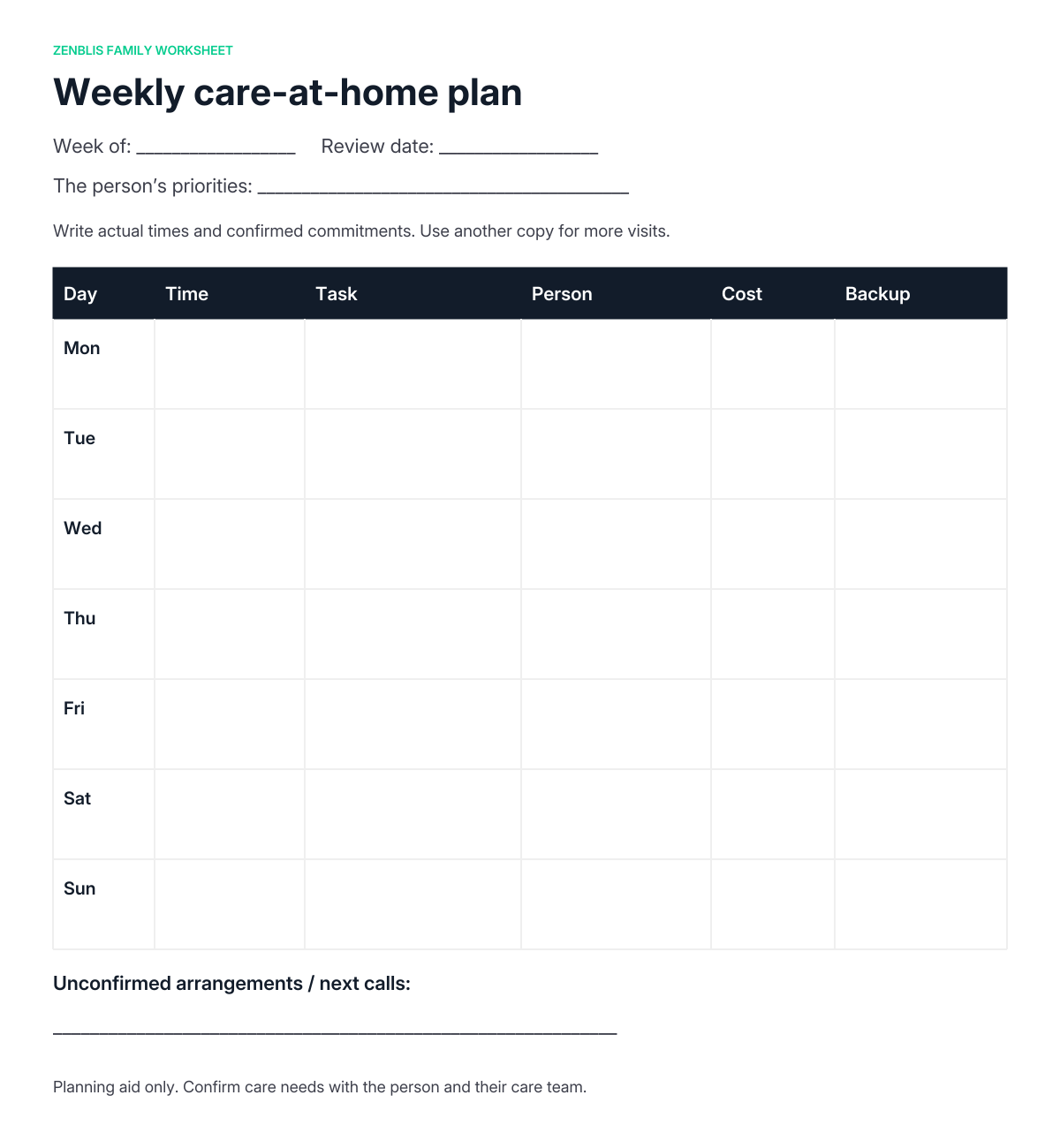
Open the full-size worksheet to save or print
Make one useful next call
Choose the most important unresolved task and contact the person or service that may be able to help. Ask about the exact work, hours, fees and backup arrangements. The NIA provider-question worksheet in Sources can help prepare that conversation. For local aging services, use the Eldercare Locator through the Administration for Community Living.
Frequently Asked Questions
- How do we know how many hours of help are needed?
- Start with the person’s tasks, preferences and current care guidance. Record when help is needed and compare that with confirmed arrangements. This worksheet does not prescribe a number of hours or determine whether living alone is safe. Ask the care team about needs that are uncertain.
- Where can we find local help?
- The Administration for Community Living’s Eldercare Locator connects older adults and families with local aging services. Call 800-677-1116 or use the service linked in Sources. Ask each local program about eligibility, availability, cost and the help it actually provides.