https://zenblis.com/resources/managing-medications-aging-parent-home
Managing Medications for an Aging Parent at Home: A Caregiver’s Safety Guide
Start with a current medication list and ask your parent’s pharmacist or prescriber to check the routine. Confirm the medicine, strength, dose and instructions before organizing doses.
By Derek Belfield - 2026-10-07
- Medication support
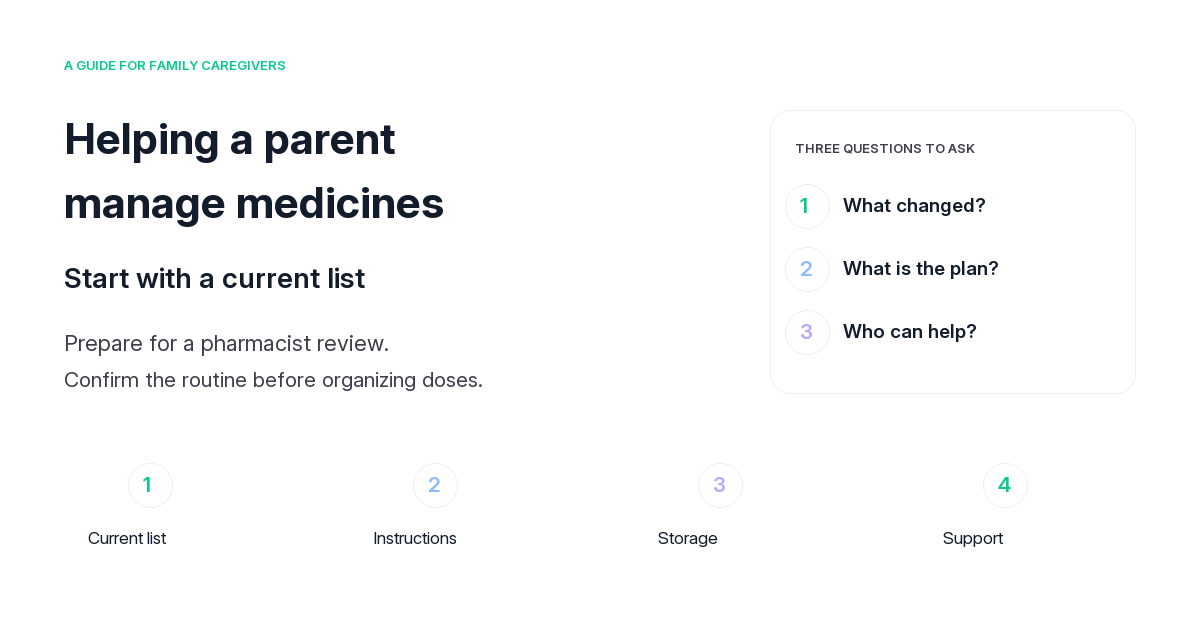
Start with a current medication list and ask your parent’s pharmacist or prescriber to check the routine. Confirm the medicine, strength, dose and instructions before organizing doses. Ask which reminder or packaging system fits the actual prescriptions. This guide supports a conversation with the care team; it does not replace individualized instructions.
Taking several medicines can make a routine harder to manage. Prescription drugs, over-the-counter products and supplements can interact. The useful question is not simply how many medicines someone takes, but whether each is still needed and being used as intended.
Build one master medication list
Include prescription and nonprescription medicines, vitamins and supplements. For each, record:
The name and strength.
Why it is taken, the amount and timing.
The prescriber and current instructions.
Include allergies and emergency contacts. Update the list whenever instructions change, keep an accessible copy and share it with the people involved in care. The FDA medication-list guide provides a starting point.
Choose a system with the pharmacist
Using one pharmacy where practical can help the pharmacist review the full regimen. Tell them about medicines obtained elsewhere and all nonprescription products. Ask whether each medicine can go in an organizer or needs its original packaging or special storage.
Reminders and packaging can help, but they do not confirm that a dose was taken. Agree who will help and how that help will be recorded. Ask about safe disposal of discontinued or expired medicines, and keep medicines away from children and pets.
Review the regimen regularly
Johns Hopkins recommends a medication review at least annually and after a fall, hospitalization or emergency visit. Ask the care team whether your parent needs more frequent review. Bring the current list and containers so the clinician can check benefits, side effects and potential interactions.
Do not stop, reduce or change doses independently. Some medicines need a supervised taper.
Watch for warning signs
Contact a health professional promptly about new confusion, unusual sleepiness, dizziness, falls or other concerning changes. Do not assume medication is the cause.
For a suspected wrong or extra dose in the United States, call Poison Control at 1-800-222-1222 for case-specific guidance. If someone collapses, has a seizure, has trouble breathing or cannot be awakened, call 911 immediately. Keep the containers and current list available for responders.
Make the routine easier to check
As a family planning step, write down who keeps the list current, who contacts the pharmacy and who handles questions after a prescription changes. Ask the pharmacist what to do about a missed dose or uncertain dose; do not guess or double a dose on your own.
Put these responsibilities alongside other support in your weekly care-at-home plan.
How Zenblis helps
Zenblis is an independent senior care directory that families can browse for free. Operators can claim listings for free; subscriptions support operator tools and do not change search ranking, Bliss Score, editorial coverage or which communities appear. Zenblis takes no referral fees, kickbacks or move-in commissions.
When comparing support, ask each provider exactly what medication assistance it offers and who is qualified to provide it. A directory listing is not a clinical assessment.
Frequently Asked Questions
- What is polypharmacy, and why is it risky?
- Polypharmacy means using multiple medicines; definitions vary. Multiple prescriptions may be appropriate, but interactions and side effects deserve regular review with a clinician.
- What is the safest way to organize daily medications?
- Ask the pharmacist which system suits the specific medicines and your parent’s abilities. An organizer, reminder or pharmacy pack is an aid, not a substitute for checking the current instructions.
- How often should medications be reviewed?
- Discuss the timing with the clinician. Johns Hopkins recommends at least annual review and another review after a fall, hospitalization or emergency visit. Do not wait for a routine review when concerning symptoms occur.
- When should we get professional help with medications?
- Ask the care team for help when the routine is difficult or errors occur. New symptoms need clinical assessment. Separately, confirm whether a prospective provider offers reminders, assistance or medication administration and which staff perform it.