https://zenblis.com/resources/adult-day-services-first-visit
Adult Day Services: Questions Before the First Visit
Before choosing adult day services, confirm care capability, hours, transportation, fees and communication. Use our first-visit questions and comparison worksheet to record answers and unresolved details.
By Derek Belfield - 2026-09-07
- Caregiving
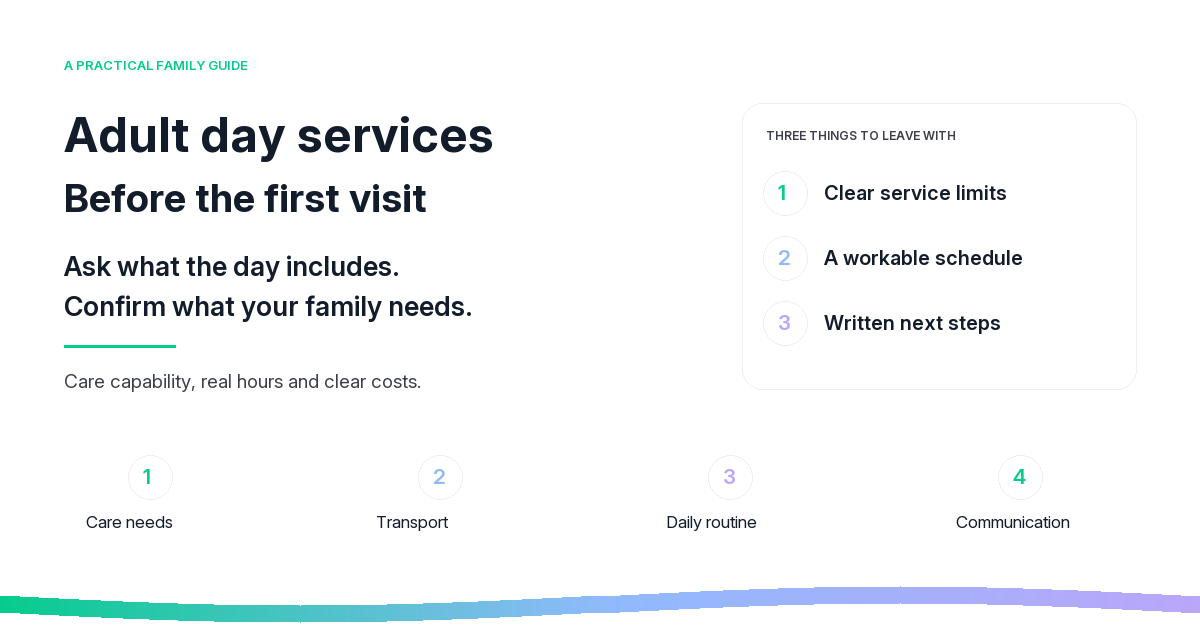
Adult day services offer support in a group setting during part of the day. Before choosing a program, confirm that its staff can meet the person’s needs, that its hours and transportation fit your week, and that you understand the fees and service limits. Leave the visit with written answers and a named contact for follow-up.
An activity calendar can help you picture the day. It cannot tell you whether staff can help your dad transfer from a chair, whether the return ride arrives before you leave for work, or what happens when the program closes. Those details determine whether an arrangement works.
Use the questions below to prepare for a visit and compare answers afterward. Include the person who may attend in the conversation as much as possible. Their interests, comfort and preferences belong alongside the practical requirements.
Start with what adult day services can offer
The Administration for Community Living describes adult day services as community-based group programs offering social and some health services for adults who need supervised care outside the home during the day. They can also provide time away from direct caregiving responsibilities. The services and level of support available depend on the program. ACL: adult day services
Do not infer a program’s clinical capabilities from its name. Ask who provides each service, when that person is on site, and what the program cannot accommodate. If you are uncertain about the help needed, discuss that with the person’s care team before relying on a program to provide it.
1. Can staff provide the specific help needed?
Bring a short list of the person’s usual support needs. Describe the task rather than using a broad label such as “some assistance.” For example, explain whether the person needs reminders at lunch, hands-on help getting to the bathroom, or assistance moving between a chair and a walker.
Ask the program:
Which of these tasks can your staff support? Which are outside your service?
Who handles medications or health needs during attendance, and what information or orders do you require?
What experience do staff have with the person’s communication or memory needs?
What happens if those needs change after enrollment?
These are questions to establish fit, not a checklist that certifies a program as safe or clinically appropriate. Ask for a specific response to any need that could affect attendance.
2. Do the hours work from door to door?
Write down the earliest arrival, latest departure and the days the person could actually attend. Then add transportation time. A program’s posted opening hours do not establish your pickup window or the length of a shared ride.
Ask whether transport is available at your address, whether assistance is provided getting in and out, and who hands the person over at each end. Check holiday closures, severe-weather decisions, late pickup rules and how cancellations are communicated.
Put the proposed arrangement into your weekly care-at-home plan. Identify any help still needed before departure or after return. Arrange a backup for a missed day rather than treating enrollment as coverage for the entire week.
3. What would a normal day feel like?
Ask to see a typical schedule, including meals, activities, rest and transitions. Find out whether participants can choose among activities or take a quiet break. Describe the person’s interests, language, food preferences and anything that makes a busy group environment difficult.
If a visit or trial attendance is available, ask what it involves, what it costs and who will help the person settle in. Afterward, ask the person what they enjoyed and what they would change. A polished tour and a comfortable ordinary day are different things to assess.
4. What will the arrangement cost?
Request a written explanation of the rate, included services and additional charges. Ask about transport, meals, supplies, minimum attendance, absences, deposits and the notice needed to stop services.
The National Institute on Aging’s provider worksheet offers a useful foundation for asking about fees, service restrictions, staff preparation and communication. Its original scope is home health care and geriatric care management; this guide adapts the comparison approach for an adult-day conversation. NIA provider worksheet
If you expect help paying, verify the specific program, provider participation and approval process before assuming a bill will be covered. Ask what you would owe while a decision is pending. A center accepting a payment source does not establish an individual’s eligibility.
5. How will staff keep you informed?
Get a named contact and agree on the usual update method. Ask how the program handles a change in condition, an incident, an urgent concern or a day that did not go well. Clarify who should be contacted first and how the person attending wants family members involved.
Also ask whether the program offers caregiver education, support conversations or referrals. Do not assume those are included because the program provides daytime supervision. Write down any separate enrollment step or charge.
Leave with a comparison record
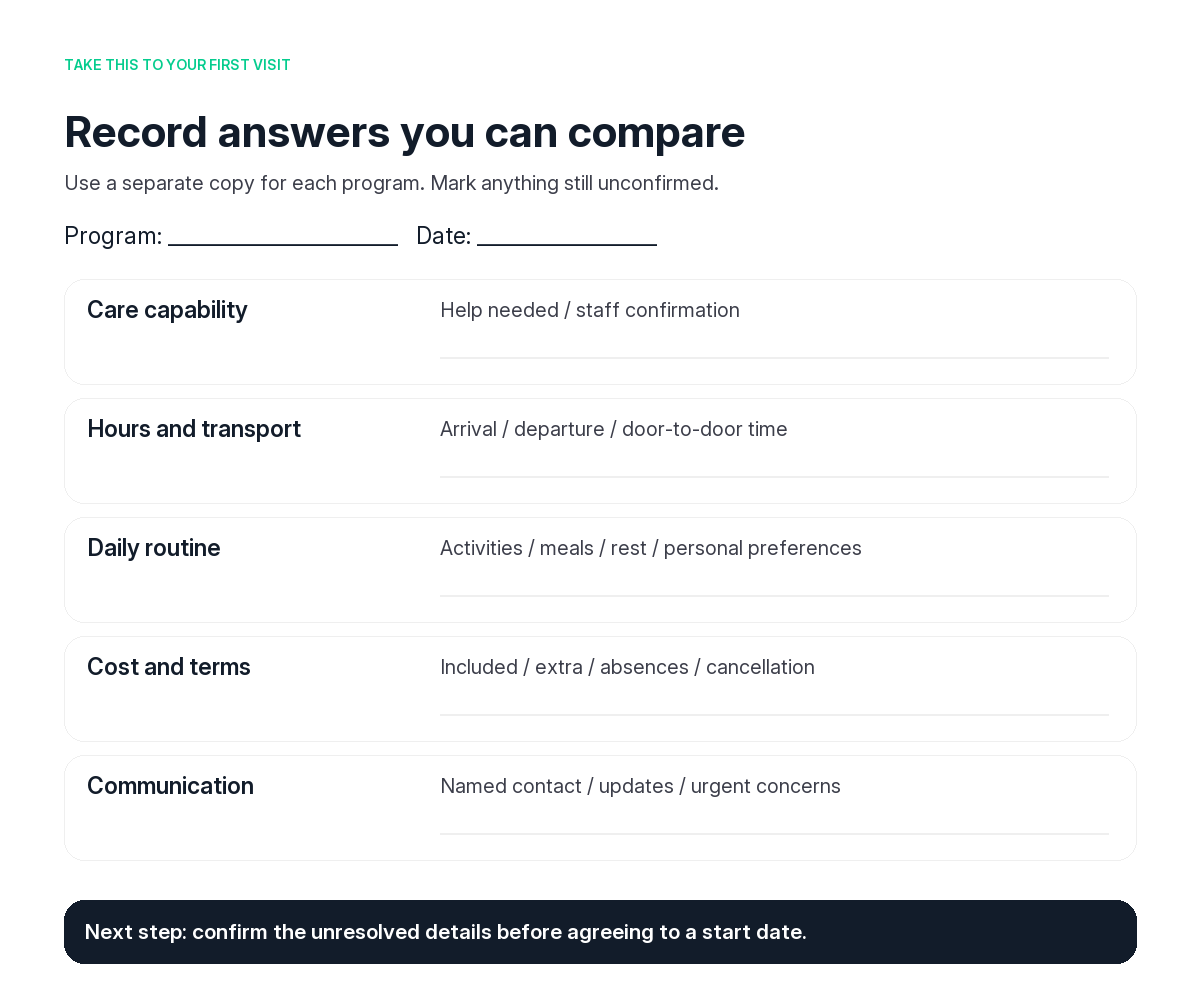
Open the comparison worksheet to save or print.
Use the accompanying worksheet for each program. Record the answer, who supplied it and anything that still needs confirmation. Keep promotional descriptions separate from commitments made about your family’s arrangement.
Before agreeing to a start date, confirm the care tasks, actual schedule, written costs and main contact. Keep unresolved items visible. Your next step may be another question, a conversation with the care team, or a second visit.
For help finding local services, the Administration for Community Living’s Eldercare Locator connects older adults and caregivers with community resources. You can call 800-677-1116. A referral is a starting point for checking fit and availability, not a reserved opening.
Frequently Asked Questions
- Is adult day care the same as home care?
- No. Adult day services take place in a community-based group setting during the day. Home care brings help to the person’s home. Families may consider both when building a weekly plan, but the tasks and hours need to be checked separately.
- Can a person with dementia attend?
- Ask each program about its admission criteria, staff experience and ability to support the person’s specific needs. The diagnosis alone does not tell you whether a particular program is suitable. Involve the care team when the required support is uncertain.
- Should we bring medical information to a first visit?
- Ask the program what is needed for an introductory visit versus a formal assessment. Share relevant information through the program’s established intake process. Ask who will review it and how it affects the proposed services.